How to Turn Sheet Waste Into a Cost for One Batch
Multiply wasted sheet area by that sheet's price. Count kerf, trim, and unused offcut as material; keep machine time separate.
On a steel or stainless sheet nest, the loss is the purchased area that did not become parts: the slot the cutter removed, the trim and skeleton, and any leftover too narrow to use. Before the batch or the quote, multiply that wasted area by the price of the sheet that was loaded. Keep torch hours and electrical load on a different line.
Answer box
What is being counted: Purchased sheet area that did not ship as finished parts. A Type 316L 20-gauge sheet listed at 48 in by 96 in is 32 ft² of stock on the ticket (Continental Steel Type 316L item 316L-20-48-96, opened 29 September 2026).
What is not being counted: Machine time and electrical load. Bystronic’s ByCut 3015 Fiber 3000 data sheet lists 17 kW total electric consumption of the system with exhaust and chiller, separate from the 120 in by 60 in nominal sheet size (ByCut Technical Data, 20 January 2026, opened 29 September 2026).
The measurement that decides it: Wasted area multiplied by the price paid for that sheet, using the same area as the ticket. The 48 × 96 listing is 32 ft²; wasted square feet times (sheet price ÷ 32) is the material-loss cost for that sheet (Continental Steel, opened 29 September 2026).
What a catalog figure leaves out: U. S. Steel’s 2026 North American Flat Rolled price book states that all prices are in U.S. dollars per 100 pounds ($/cwt), with no competitive freight offered or implied. That unit is not a cut-sheet invoice and is not a leftover-area cost (opened 29 September 2026).
Check before the batch or the quote: Confirm the invoice price and listed weight of the sheets that will be loaded. Subtract only the nest’s part area, plus any leftover large enough for another part, from that purchased area (Continental Steel sheet ticket and U. S. Steel weight basis, opened 29 September 2026).
Last checked: 29 September 2026
Where a sheet’s area goes when the cutter runs
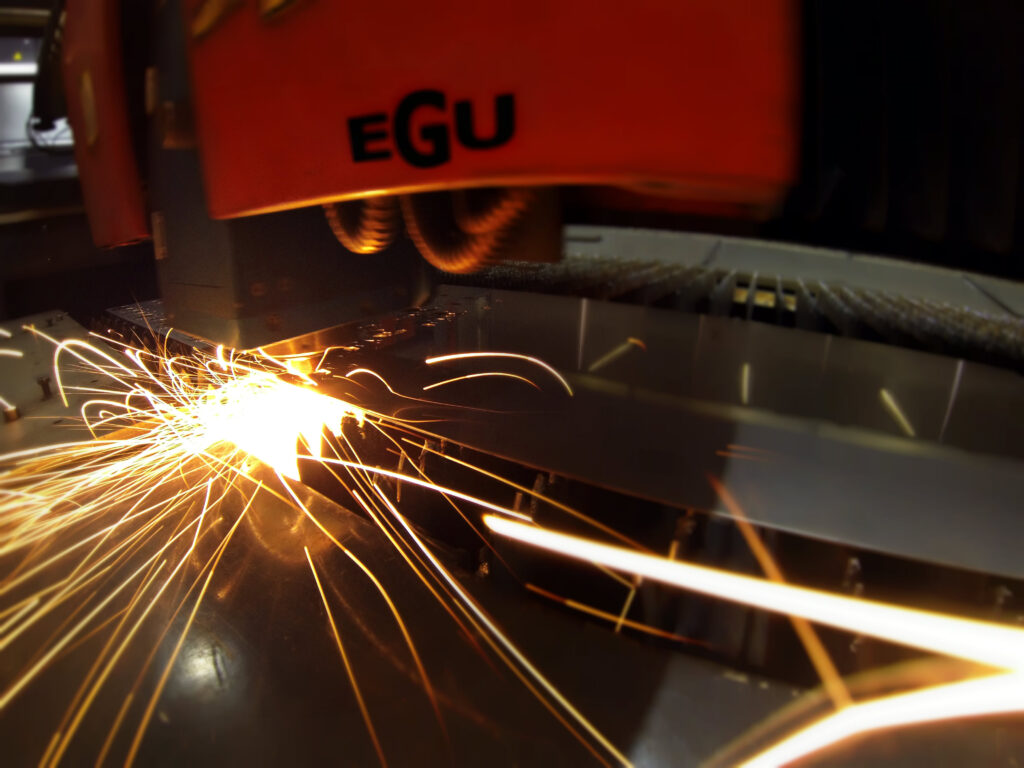
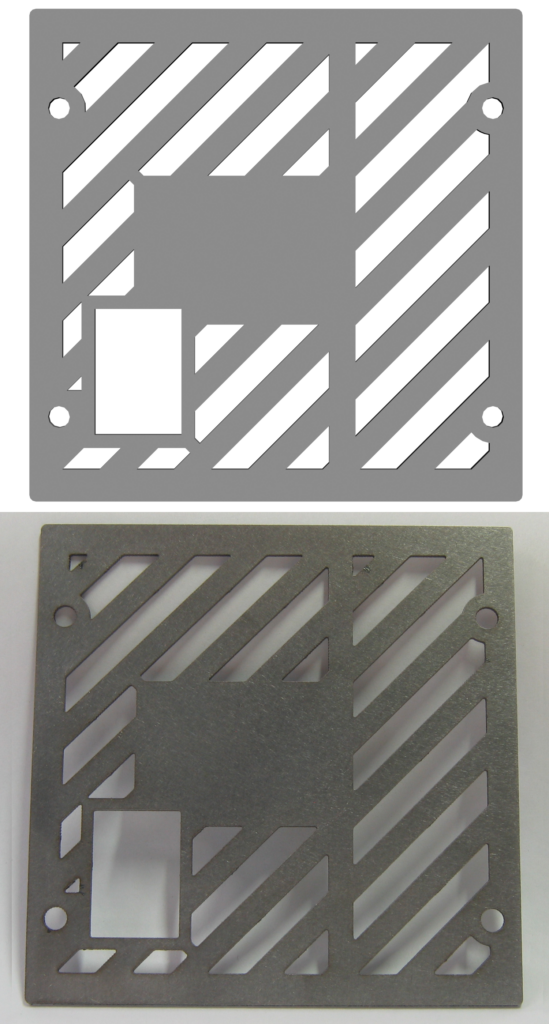
A sheet is a rectangle of stock. A laser, a plasma arc, a waterjet, or a saw does not lift parts out of that rectangle. It removes a slot. The beam, the jet, or the teeth turn a strip of metal into melt, dust, or chips. What remains on the table is three kinds of leftover: the web between parts, the frame around the nest, and any unused rectangle that the nest never touched.
Name the pieces you can point to. The nozzle or the blade is what opens the slot. The sheet edge is the purchased border. The skeleton is the web and frame after the parts come out. An offcut is a leftover that still has a usable outline. Scrap is a leftover that does not. The parts that leave the shop are only one share of the rectangle you paid for.
Continental Steel’s listing for Type 316L, 20 gauge (0.0355 in), 48 in by 96 in, puts a number on that rectangle: 1.512 lb/ft² and an estimated 48.39 lb per sheet. Forty-eight inches by ninety-six inches is 32 ft². Every square foot of kerf, trim, or unused offcut on that ticket is 1.512 lb of 316L that was bought and did not ship as a part. The cutter does not change that arithmetic. It only decides which square feet become slots and which become skeleton.

Why a sheet batch is not priced like a bar cutoff
A bar, a pipe, or an extrusion wastes length: the cutoff between pieces, plus the end that is too short to finish. That count is a line. A sheet nest wastes area: slots in two directions, a clamp or edge margin, a skeleton, and a leftover that may or may not fit another part. Applying a bar leftover rule to a sheet understates the loss, because the skeleton is not a short end. It is a frame spread across the whole plate.
The machine table is not the invoice either. Bystronic’s ByCut 3015 lists a nominal sheet size of 120 in by 60 in and a cutting area of 123 in by 63 in. That is the envelope the shuttle will hold. A service-center sheet can be smaller. The 48 × 96 316L ticket above is 32 ft². The ByCut 3015 nominal envelope is 50 ft². Costing waste against the table size instead of against the sheet that was actually loaded assigns the loss to the wrong rectangle.
Hypertherm’s current Powermax45 XP page, last updated 18 August 2026, publishes production cut speeds by material and thickness at 45 A — for example 181 inches per minute on 10-gauge mild steel in laboratory testing. That figure is how fast the torch moved in the test. It is not the area left behind. Speed belongs on the machine-time line. The leftover square feet belong on the material line. Mixing them hides both numbers.
What to read on the mill book, the sheet ticket, and the nest
Open the mill book for the pricing unit, not for a made-up sheet price. U. S. Steel’s 2026 North American Flat Rolled publication, opened 29 September 2026, states that all prices are in U.S. dollars per 100 pounds ($/cwt) and that hot-rolled sheet steel is sold on an actual-weight basis, typically ordered to a minimum thickness. If your invoice follows that unit, wasted area becomes wasted weight before it becomes money: wasted ft² times the listed lb/ft², then that weight times the dollars per hundredweight on the invoice, divided by 100. Do not copy a mill extra from the book onto a cut sheet you did not buy from that book.
Open the supplier ticket for the exact sheet. Continental Steel’s Type 316L 20-gauge 48 × 96 listing, opened the same day, states thickness 0.0355 in, sheet weight per unit area 1.512 lb/ft², estimated weight 48.39 lb, and ASTM A240 / A480. Record those four facts next to the nest: material, thickness, process, and machine. If the nest ran on a different grade or a different thickness, that ticket is the wrong denominator.
Open the nest report for the shares. The useful split is part area, kerf-and-web area, edge trim, and unused leftover. A leftover is still material only when another part fits on it. A strip too narrow to use stays in waste. The nest software’s “yield” number is not a cost until you multiply the wasted share by the price of that sheet.
On a ByCut 3015 Fiber 3000, the same data sheet that lists a 120 × 60 in nominal sheet also lists a 0.47 in maximum cutting thickness for stainless at 3,000 W, under the maker’s stated conditions of an optimally maintained system and Bystronic-specified laser materials. That thickness limit is a process bound. It is not a waste percent. If the job is 0.0355 in 316L, the thickness limit is already satisfied; the cost question is still how much of the 32 ft² ticket became parts.
The number to put on the batch before the quote leaves
The choice this topic turns on is which area you multiply. Use the invoice price of the sheets that will be loaded, divided by the area of those sheets, times the wasted area on the nest. If a leftover is large enough to nest another part on a later job, take that leftover out of waste for this batch and carry it as stock. If it is only a skeleton, leave it in waste. If you do not yet know the four facts — material, thickness, process, and machine — leave the kerf strip blank and still cost the trim and the unused rectangle from the nest outline; do not invent a slot width to fill the gap.
Do the multiply once per sheet size on the job. A batch that burns three 48 × 96 sheets does not get one waste percent copied from a different plate. Each sheet has its own part share, kerf-and-skeleton share, and unused-offcut share. Sum those wasted areas, then multiply by that sheet’s unit price. Machine time stays off that line: the ByCut 3015 Fiber 3000’s 17 kW system consumption, and the Powermax45 XP’s 181 ipm laboratory speed on 10-gauge mild steel, tell you how the cutter was loaded, not what the leftover metal cost.
Why the mill sells the sheet by the hundredweight
U. S. Steel’s 2026 book prices flat-rolled product in dollars per 100 pounds, on actual weight for hot-rolled sheet, with freight not included in that figure. A fabricator who bought a cut sheet from a service center may see a price per sheet instead. Either way the conversion is the same geometry. Continental Steel’s 316L 20-gauge 48 × 96 sheet is 32 ft² and 48.39 lb. If the invoice is per sheet, wasted area over 32 ft² is the wasted share of that invoice. If the invoice is per hundredweight, wasted area times 1.512 lb/ft² is the wasted weight, and that weight over 100 is the wasted share of the $/cwt figure on the invoice. The dollar amount has to come from that invoice. A mill extra printed next to a coil width is not the cost of your leftover.
That weight basis is why quoting from finished part area alone understates the stock that had to be bought. The customer is paying for material purchased, not only for material that ships as parts. The 48.39 lb ticket is the purchased mass. The parts are some fraction of it. Kerf, trim, and unused offcut are the rest of the same ticket.
The mistake that treats leftover sheet as free
The harmful mistake is to price the batch from finished part area only, as if the skeleton, the slot, and the unused offcut had no invoice behind them. That count makes the quote look cheap and the job look efficient until the next mill receipt arrives. Multiply the wasted area by the price of that sheet. Put machine time somewhere else. If the leftover cannot take another part, it is not free stock.
Read next: What trim, the skeleton, and the edge margin cost on a sheet · How a fabrication quote should show material loss on its own line