What trim, the skeleton, and the edge margin cost on a sheet
The edge margin, the web between parts, and the leftover frame still cost the sheet. Count them on the nest before quoting the batch.
On a steel, plywood, or acrylic sheet, the shop pays for the whole rectangle, not only the pieces that fall out. The border the cutter cannot process, the web left between parts, and the leftover frame after the nest are all area that never ships as a finished piece. Count those bands on the nest before the batch or the quote, because they change how many parts come off the sheet even when the kerf stays the same.
What is being counted — Paid sheet area that stays in the edge margin, the web between parts, and the leftover frame (the skeleton), not the slot the cutter removes.
What is not being counted — Kerf width, machine time, and a clamp-margin millimetre taken from a machine that was not measured on this job.
The measurement that decides it — How many whole parts still fit after the usable rectangle, the part-to-part strip, and any remainder large enough for another part are marked on the nest.
What a catalog figure leaves out — A working-range table names travel and sheet thickness. It does not publish the width of this machine’s clamp dead area unless that page states the millimetre.
Check before the batch or the quote — Compare the bought sheet size with the machine working range, mark remnant versus skeleton on the nest, and leave the clamp band blank if it was not measured.
Last checked — 29 September 2026
What remains after the cutter has made the slot
The cutter still removes a slot. On a punch press the slot is the punch and die opening. On a laser or a waterjet it is the beam or the jet. That slot is kerf. This page is about what is left around the parts after that slot has been cut.
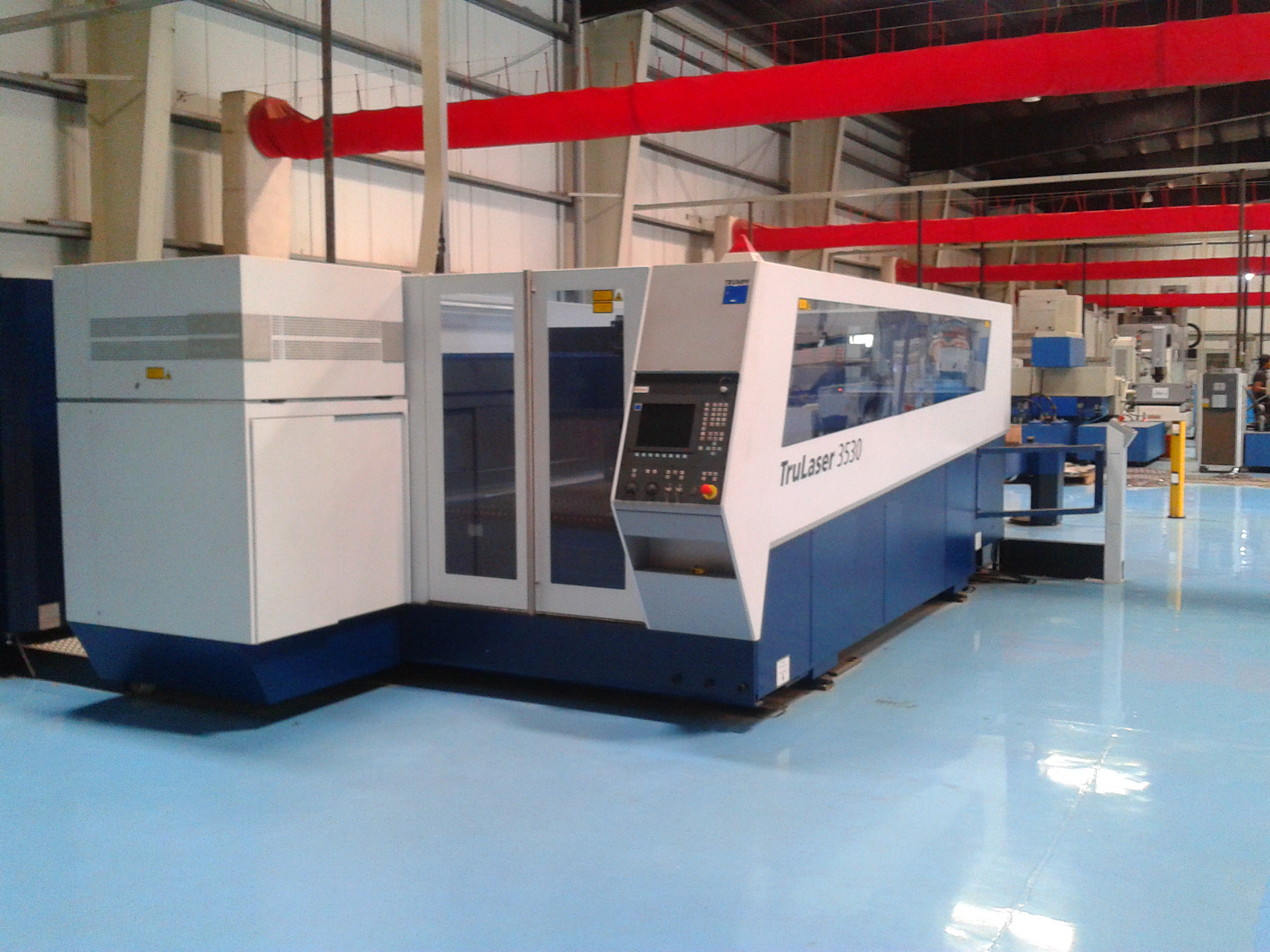
Three leftovers sit on a sheet nest. The first is the edge margin: a band along the sheet edge that the process cannot turn into a finished profile, because the sheet is clamped, because the head cannot reach, or because the mill edge itself is not the same as a sheared edge. The second is the web: a strip of stock left standing between neighbouring parts so the sheet does not fall apart while the last profiles are still being cut. The third is the skeleton: the connected frame that is left when every nested part has been freed. TRUMPF names that leftover on the TruPunch 3000 as a scrap skeleton, and it treats remainder strips as a separate handling problem from the skeleton itself.
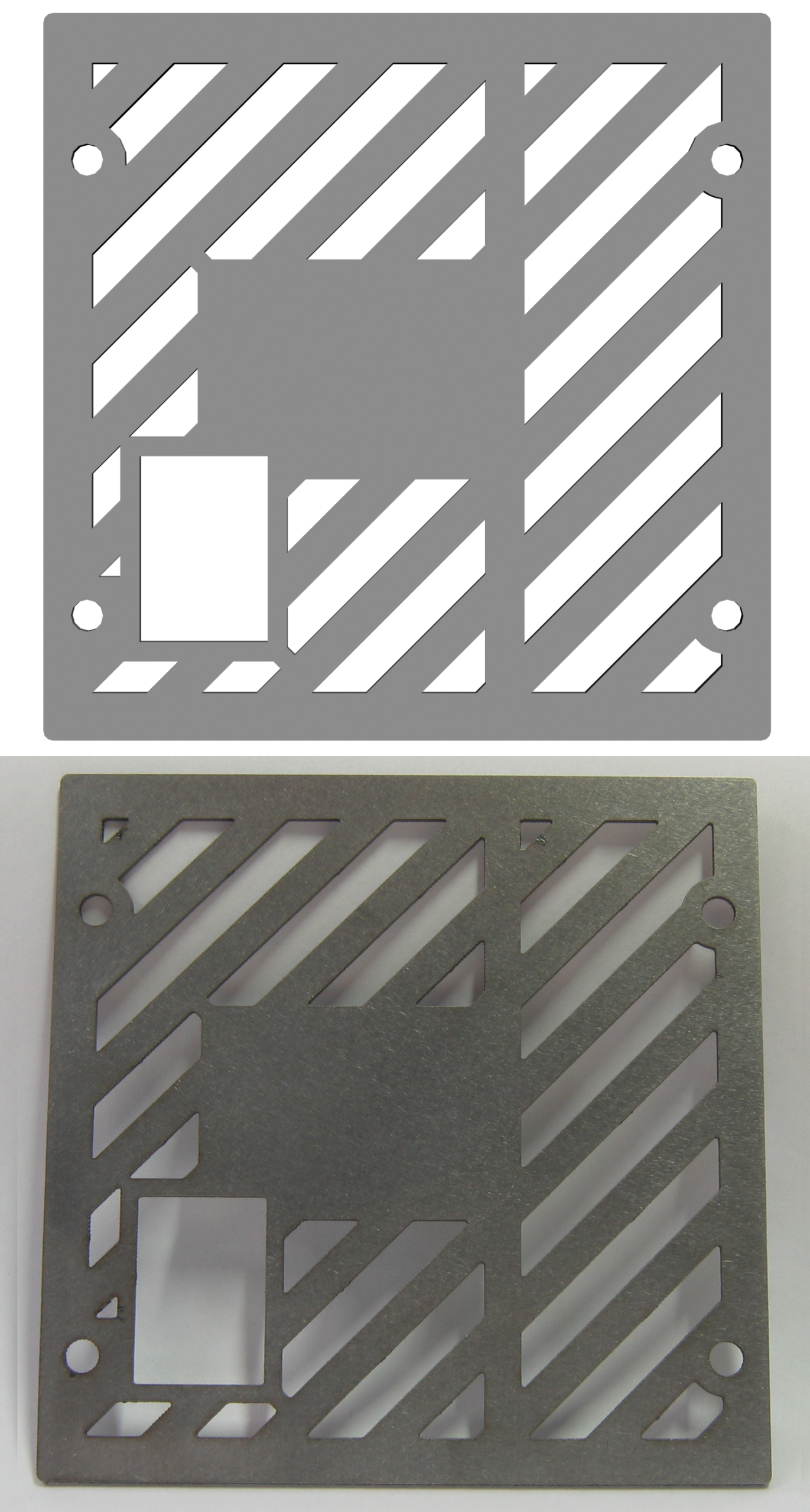
Those three bands are still the same alloy and the same thickness as the parts. They are not free. They are the difference between the rectangle that was bought and the area that ships. A leftover piece is an offcut only when another part from this job, or a later job in the same material and thickness, actually fits on it. A frame that is only holes and thin ribs is scrap, even if its area looks large on a utilisation printout.

How a sheet frame fails differently than a bar cutoff
A bar, a pipe, or an extrusion wastes length: the cutoff between pieces, plus the end that is too short to finish. A sheet wastes area: a border, a web, and a frame. The two counts do not convert. A waste percent taken from a bar job does not describe a sheet nest, and a parts-per-sheet figure does not describe a bar drop.
The sheet case also fails in a way a single kerf figure does not capture. Count the finished rectangles as if they tiled the bought sheet and the count is high. Leave a web between every pair of parts and the count drops, even though the kerf in the material did not change. Leave an uncuttable band at the clamps and the usable rectangle shrinks again, still with the same kerf. TRUMPF’s TruPunch 5000 page states that retractable clamps “facilitate processing even in the clamp dead area,” which is an admission that a dead area exists on that punch, not a millimetre you can copy onto a laser nest. The same page offers skeleton-free processing as a named function that saves material. If the machine on this job does not do that, the skeleton is still on the sheet.
A waterjet table is a different constraint again. On the OMAX 120X-S, the maker lists a table of 14 ft 11 in by 11 ft 5 in (4.55 m by 3.48 m) and X-Y cutting travel of 13 ft 4 in by 10 ft 0 in (4.06 m by 3.04 m), and it warns that accessories may reduce travel. That gap is table size versus nozzle travel. It is not a clamp margin measured on a particular plate. A plate smaller than the cutting envelope can still lose a web and a skeleton. A plate larger than the envelope cannot be finished in one setup, which is a different loss from a frame of leftover ribs.

What to check on the nest, the mill ticket, and the machine range
Open the nest and name four things next to any leftover: the material, the thickness, the process, and the machine. Then look at three documents that actually state sizes.
On the machine page, read working range against the sheet you intend to buy. TRUMPF lists the TruPunch 3000 medium-format punching range as 2500 mm in X and 1250 mm in Y, with a maximum sheet thickness of 6.4 mm and two clamps on that format. The large-format range is 3000 mm by 1550 mm with three clamps. The TruPunch 5000 large-format range is 3050 mm by 1550 mm, maximum sheet thickness 8 mm, four clamps. Those numbers bound the rectangle the punch can process. They do not replace a measured clamp band on this machine. If the maker page does not give that millimetre, leave it blank on the quote.
On the mill or service-center page, read the bought size, not a habit size. SSAB lists ASTM A36 mill plate from 60 in to 131.9 in wide (1500 mm to 3350 mm) and from 120 in to 1020 in long (3050 mm to 25910 mm). Temper-leveled plate from the same page can be 48 in to 96 in wide. A nest drawn on a 48 in temper-leveled sheet is not the same purchase as a mill plate that cannot be narrower than 60 in. ASTM A568/A568M-09 Table 8 allows mill-edge carbon sheet specified over 30 in to 50 in wide an extra 1⅛ in over the specified width, with no tolerance under. Table 9 allows cut-edge sheet specified over 30 in to 48 in only ³⁄₁₆ in over. Cut edges, the same standard says, are what you get after shearing, slitting, or trimming mill-edge sheet. Thickness on that specification is measured not less than ⅜ in from a cut edge and not less than ¾ in from a mill edge. The mill-edge band is a real extra on the ticket. It is not a clamp figure.
On a wood sheet the bought size is also not always the nominal panel. APA states that a typical plywood panel is 4 ft by 8 ft, and that a “Sized for Spacing” mark means the manufacturer made the panel slightly less than the traditional 48 in by 96 in. APA’s TT-055A example is 47⅞ in by 95⅞ in. A nest that assumes a full 48 in by 96 in overstates the plywood that is actually on the saw or the laser bed.
On the nest itself, separate remnant from skeleton the way the punch-maker already does: remainder strips that can be handled as stock, versus a scrap skeleton that is only a frame. If a later part in the same material and thickness fits on a remainder, keep it as an offcut. If it does not, it is scrap. Do not record a utilisation percentage that treats the skeleton as recovered material.

The decision before the nest or the quote
The choice this topic turns on is whether the leftover is an offcut you keep or a skeleton you scrap, and whether the nest still yields enough whole parts after the edge and the web are left standing.
If the remaining rectangle is large enough for another part from this order, keep it and recut it. If it is only a frame, price it as wasted sheet, not as inventory. If dropping one row of parts frees a usable offcut, compare the value of that offcut with the cost of buying another sheet. If the clamp dead area has not been measured on this machine, do not fill the margin with a number from another shop. Shrink the nest to the working range the maker published, leave the unknown band blank, and recount parts per sheet.
A quote built only on finished-part area understates the stock that had to be bought. The customer is paying for the sheet, including the trim, the web, and the frame. Machine time is a separate line. Do not hide the leftover area inside a single “material” percentage that cannot be checked against the nest.
Mill-edge extra is not a clamp figure
Hot-rolled mill-edge carbon sheet specified over 30 in to 50 in wide may arrive as much as 1⅛ in over the ordered width under ASTM A568/A568M-09 Table 8. Cut-edge sheet in the neighbouring width band is allowed only ³⁄₁₆ in over. That mill-edge extra is stock the mill is permitted to ship. It is not the uncuttable clamp band on a TruPunch, and it is not the gap between an OMAX table and the listed cutting travel. Mixing those three numbers on one nest makes the count wrong even when every kerf on the sheet is unchanged.
The count that treats every leftover as free stock
The harmful mistake is to divide sheet area by part area, call the remainder recoverable, and quote that count. The edge margin, the web, and the skeleton still cost the sheet. Unless another part fits on what is left, the remainder is scrap. Inventing a clamp millimetre for a machine that was not measured makes the same error in the other direction: it throws away parts that would have fitted, or it nests parts into a band the punch cannot process. Leave the unmeasured band blank, mark remnant and skeleton as different leftovers, and recount whole parts before the batch.
Read next: How many finished pieces one sheet can give once the kerf is counted · How an offcut differs from scrap on a repeat job