How Kerf Loss Grows When the Same Cut Is Repeated Thousands of Times
One kerf slot is easy to miss on a prototype. On a production run the same slot stacks into extra sheets. Recount waste when the order quantity changes.
On plywood under a circular saw, or on steel plate under a laser, the loss you count is the slot the cutter removes. One slot on a prototype is easy to miss. The same slot on every cut in a production run is a stack of sheets. Before the batch or the quote, multiply a coupon measured in the job stock by the total cut length and the sheet count at the new order quantity. Do not copy the leftover from a one-off sample onto the production run.
Answer box
| What is being counted | The slot the cutter removes on each cut, then that slot repeated for every cut in the run. |
|---|---|
| What is not being counted | Machine time, clamp border, skeleton, an offcut that still holds a part, and the finished size on the drawing. |
| The measurement that decides it | A coupon slot in the same material, thickness, process, and machine as the job, times total cut length, times sheets. ISO 9013:2017 names kerf width as the width of the cut at the upper edge of the cut. Last opened 29 September 2026. |
| What a catalog figure leaves out | A Freud LU80R012 plywood blade lists kerf 0.126 in; an OMAX Mini-Jet lists 0.020 in; TRUMPF compares a laser kerf under 0.5 mm with a plasma kerf of 1 mm to 4 mm. None of those pages names one alloy, one thickness, one process, and one machine together as a measured slot. |
| Check before the batch or the quote | Cut a coupon in the job stock. Read total cut length on the nest. Recount sheets at the new order quantity. Do not use the prototype remnant as the waste figure. |
| Last checked | 29 September 2026 |
What one slot actually takes out of the stock
Kerf is the missing strip. It is not the finished part. ISO 9013:2017, confirmed on the ISO catalogue page on 29 September 2026, defines kerf width as the width of the cut at the upper edge, or immediately below that edge if the top has melted. The standard applies that language to flame, plasma, and laser cuts. On a saw the same idea is a toothed slot. On a waterjet it is the path of the jet.
The parts you can point to change with the process. On a table saw the blade teeth and the plate of the blade pass through plywood; Freud’s LU80R012 listing, opened 29 September 2026, gives a 12 in blade with a 0.126 in kerf and a 0.087 in plate, for veneered plywood, chipboard, melamine, and laminate at a depth of cut from 1/4 in to 1-5/8 in, on a slide miter saw, a table saw, or a radial arm saw. That 0.126 in is the maker’s blade figure. The slot in a named sheet on a named saw is a different measurement.
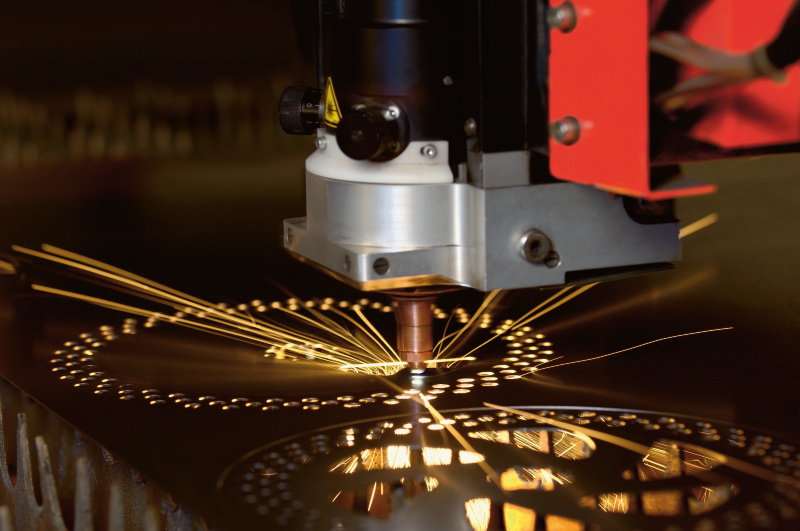
On a laser the beam, the nozzle, and the cutting gas meet the sheet. TRUMPF’s laser-cutting page, opened 29 September 2026, states that the focused beam often has a diameter less than half a millimetre, that the kerf is barely wider than the beam, and that the focal diameter sets the gap width. Those figures describe the beam and the gap on that page. They are not a kerf width for a named alloy and thickness on a named machine.
On an abrasive waterjet the orifice, mixing tube, and nozzle body form the jet. OMAX’s FAQ, opened 29 September 2026, lists a Mini-Jet kerf of 0.020 in (0.5 mm), 0.010 in smaller than a standard MAXJET nozzle, and a 7/15 MAXJET5 kerf of 0.015 in (0.38 mm). The same page warrants the MAXJET 5i nozzle for 500 operating hours. After a nozzle change, the old measured slot is no longer the slot.
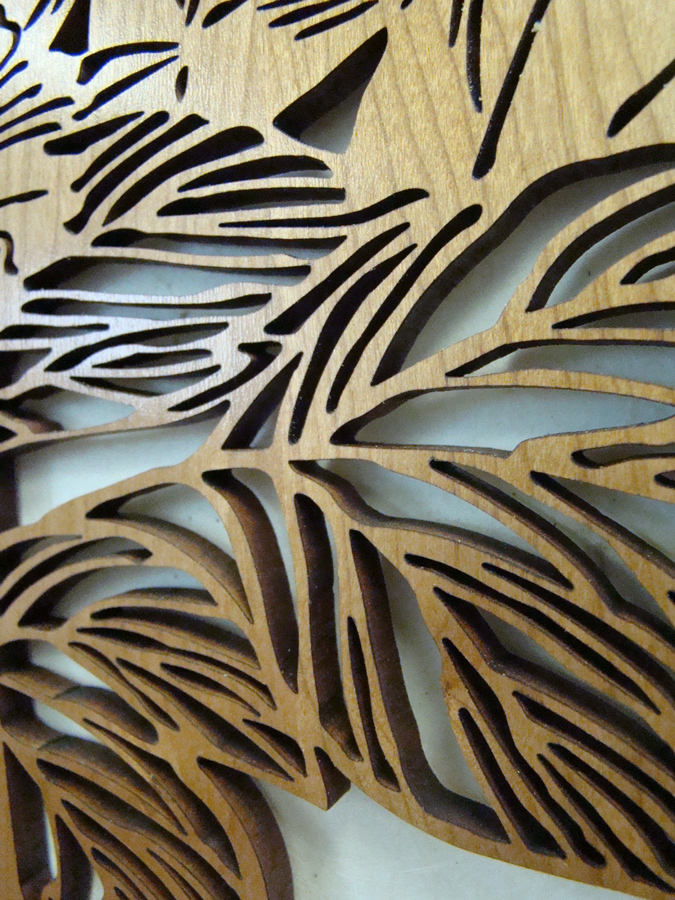

Why a prototype hides the loss a batch cannot
TRUMPF’s same laser-cutting page says shops use the process for small lot sizes, large variant ranges, and prototype construction. That is the useful contrast for this topic. A prototype sheet shows one nest, one remnant, and a slot that looks like a hairline. The estimator who treats that remnant as the waste for the job is counting a sample, not a run.
A production run repeats the slot. Each cut between parts consumes a strip. If the nest has the same cut a hundred times on one sheet, and the order uses forty sheets, the slot has been cut four thousand times. ISO 9013:2017, on the ISO page opened 29 September 2026, applies laser cuts from 0.5 mm to 32 mm thick and plasma cuts from 0.5 mm to 150 mm thick. TRUMPF’s technology comparison, opened the same day, places a laser kerf under 0.5 mm against a plasma kerf of 1 mm to 4 mm. Those are process comparisons, not a coupon. They still show why a saw prototype and a laser batch are not interchangeable: the slot that repeats is a different width.
The stock you buy is sold in sheets. Online Metals, opened 29 September 2026, lists 0.25 in A36 hot-rolled carbon steel plate, part 9610, in a 48 in by 96 in (4 ft by 8 ft) cut at $489.12 each. That price is for the plate as purchased. Kerf does not appear as a separate line on the mill ticket. If the order grows from one prototype plate to a stack of the same 48 in by 96 in plates, every additional plate carries its own slots. The customer is paying for plates purchased, not only for parts that ship.
A circular saw on plywood fails in the same way at quantity, only with a wider catalog slot. Freud’s 0.126 in blade kerf is still only a catalog figure. If you treated that figure as the slot and ripped along the 96 in length of a 48 in by 96 in sheet, each rip would remove 0.126 in times 96 in of area, or 12.096 sq in, as catalog kerf. One thousand such rips would remove 12,096 sq in of catalog slot. That arithmetic is a warning, not a yield. The real plywood slot has to be measured on a coupon in the job panel, on the saw that will run the batch, after the blade that is in the arbor is the blade that will stay in the arbor.
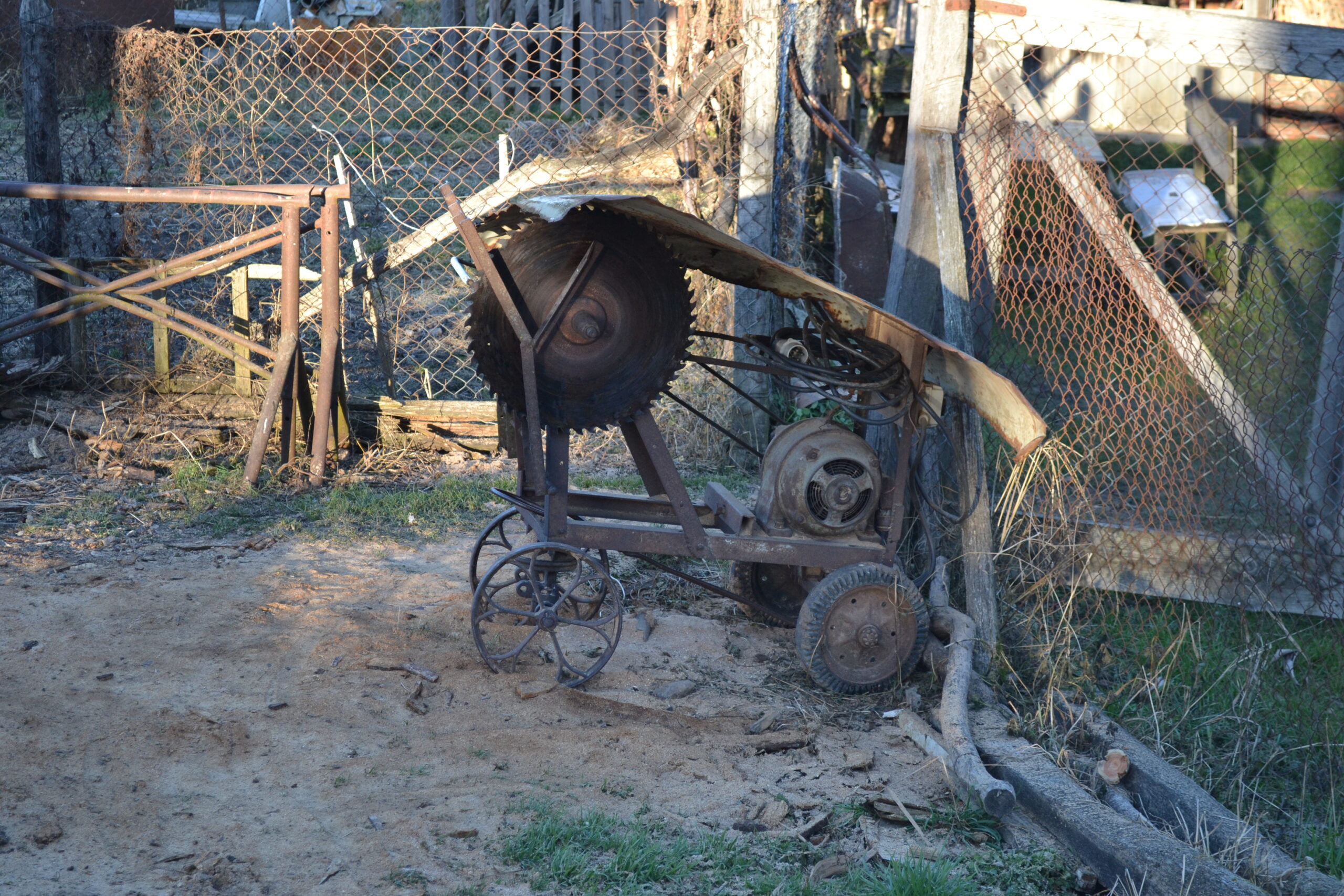

What to check on the spec, the coupon, the nest, and the quote
Open the maker page for the consumable that is actually in the machine. On 29 September 2026 the Freud LU80R012 page listed kerf, plate, diameter, tooth count, depth of cut, and the saw types. Record those as catalog numbers. Then cut a coupon in the same plywood or the same steel, at the same thickness, with the same process and the same machine as the job. Measure the slot. A useful record names material, thickness, process, and machine next to the width. If one of the four is missing, leave the production width blank.
On the nest, add the length of every cut that removes stock, including interior profiles. Multiply that length by the measured slot. Multiply again by the number of sheets at the current order quantity. That product is the kerf area you can defend. It still omits clamp border and skeleton; those belong on other lines. For A36 plate, the Online Metals 48 in by 96 in size tells you the purchased area of each sheet. The quote should show how many of those sheets the new quantity requires, not how many parts a prototype leftover seemed to imply.
On a waterjet, OMAX states that the jetstream width changes with material, thickness, and cutting speed, and that several sheets can be stacked. Stacking multiplies the slot through every layer. After 500 hours on a warranted MAXJET 5i, or after any nozzle swap, measure again.
The decision before the nest, the quote, or the batch
Recount when the order quantity changes. A prototype nest that fitted one sheet can need an extra sheet once the slot is counted at quantity, or it can free an offcut that only exists when several sheets share a common cut. The choice this topic turns on is not a new machine. It is whether the waste figure on the quote is the coupon times the run, or the leftover from a sample. If the four facts — material, thickness, process, machine — are not all known, leave the width blank and do not price the batch from a catalog kerf. If they are known, measure the coupon, total the cut length, multiply by the new sheet count, and then decide whether the nest still yields enough parts per sheet.
A different process is a different stack. TRUMPF’s comparison of a laser kerf under 0.5 mm with a plasma kerf of 1 mm to 4 mm is enough to stop anyone from copying a plasma prototype remnant onto a laser production quote, or the reverse. Freud’s 0.126 in plywood-blade kerf is enough to stop anyone from copying a saw sample onto a laser nest. The decision is to remeasure on the cutter that will run the thousands of repeats.

One fact that belongs to a repeated cut
One slot is a small loss. The same slot on every cut in a production run is a stack of sheets. Online Metals’ 0.25 in A36 plate in 48 in by 96 in at $489.12, opened 29 September 2026, is the purchased unit. The kerf fraction of each plate does not shrink because the first plate looked efficient. Thickness still has to sit next to the coupon. A setting that worked on a thin prototype panel is not a setting for a thicker production panel.
OMAX’s Mini-Jet catalog kerf of 0.020 in versus 0.015 in on the 7/15 MAXJET5 shows that even inside one maker’s nozzle line the repeating slot changes when the consumable changes. Catalog widths are starting points for the coupon. They are not the waste figure for thousands of repeats.
The harmful mistake
Using a one-off sample as the waste figure for a production run. The prototype remnant, the catalog blade width, or a single coupon from last month’s nozzle will understate the stock you have to buy once the same cut is repeated thousands of times. Recount the slot at the new quantity, on the stock and the cutter that will actually run.
Read next: How many finished pieces one sheet can give once the kerf is counted · How to turn sheet waste into a cost for one batch