How many finished pieces a sheet still yields after the kerf is counted
Each cut between parts takes a strip. Count slots, skeleton, and unused border before quoting how many finished pieces one sheet can give.
The finished count on a plywood panel or a steel plate is the number of parts that remain after every slot between them has been cut. Dividing the sheet area by the part area treats those slots as usable stock, so the paper count is high. Before the nest or the quote, measure the slot on a coupon in this material, this thickness, this process, and this machine, then recount the sheet with the strips, the skeleton, and the unused border in the loss column.
Answer box
- What is being counted
- Finished parts that remain after the cutter removes a slot between them. The leftover skeleton and the unused border are loss, not yield.
- What is not being counted
- Length wasted on a bar, pipe, or extrusion cutoff; coil edge trim; machine time; a later bend allowance.
- The measurement that decides it
- The slot measured at its widest point on a coupon in the same material, thickness, process, and machine, then applied as a strip between neighbouring parts. OMAX states abrasivejet kerf is typically measured at its widest point.
- What a catalog figure leaves out
- Freud’s LU80R012 listing states a kerf of .126″ for that 12-inch plywood-and-melamine blade. The listing does not state the sheet, the thickness, or a slot measured after the cut.
- Check before the batch or the quote
- Insert the measured strip between parts, keep the unused border, and recount finished pieces. Do not treat a rectangle packing of part outlines as the yield.
- Last checked
- 29 September 2026
Where the missing strip actually goes
Each cut between parts consumes a strip. That strip is the kerf: the slot the cutter removes, not the finished size on the drawing. On a table saw or a panel saw the teeth take a toothed slot. On a laser the beam melts or vaporizes a path. On a waterjet the nozzle throws a jet. The reader can point to the blade or the nozzle, the sheet edge, the skeleton left after the parts come out, and any offcut that is still wide enough for another part.
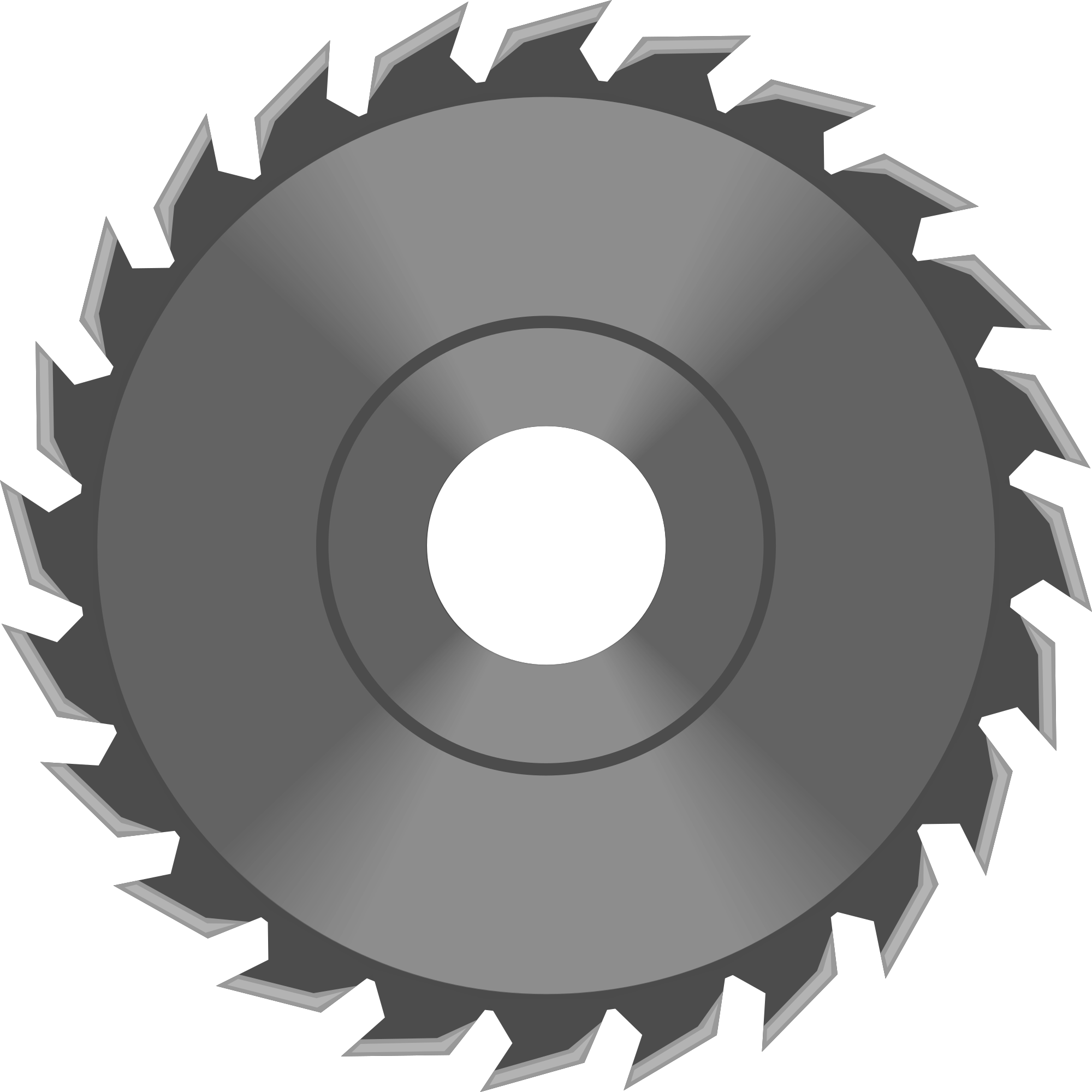
Freud’s product page for the LU80R012 12-inch Ultimate Plywood & Melamine blade lists a kerf of .126 inches and a plate of .087 inches. The teeth stand wider than the plate, so the strip that disappears between two cabinet parts is the slot, not the plate. The same page names veneered plywood, chipboard, melamine, and laminate, and states a depth of cut from 1/4 inch to 1-5/8 inches. That is the maker’s figure for that consumable, not a slot measured in a named plywood thickness on a named saw.
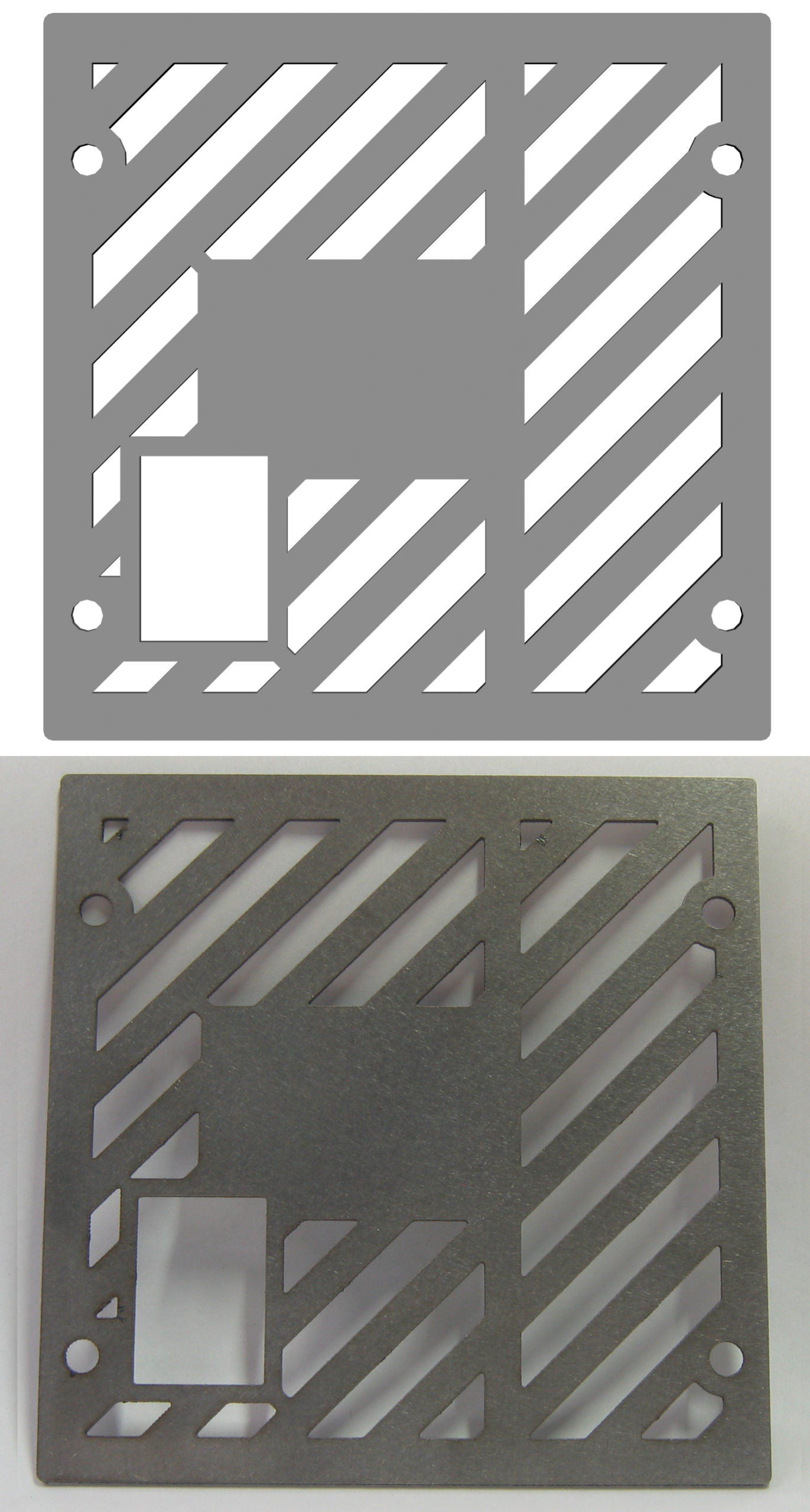
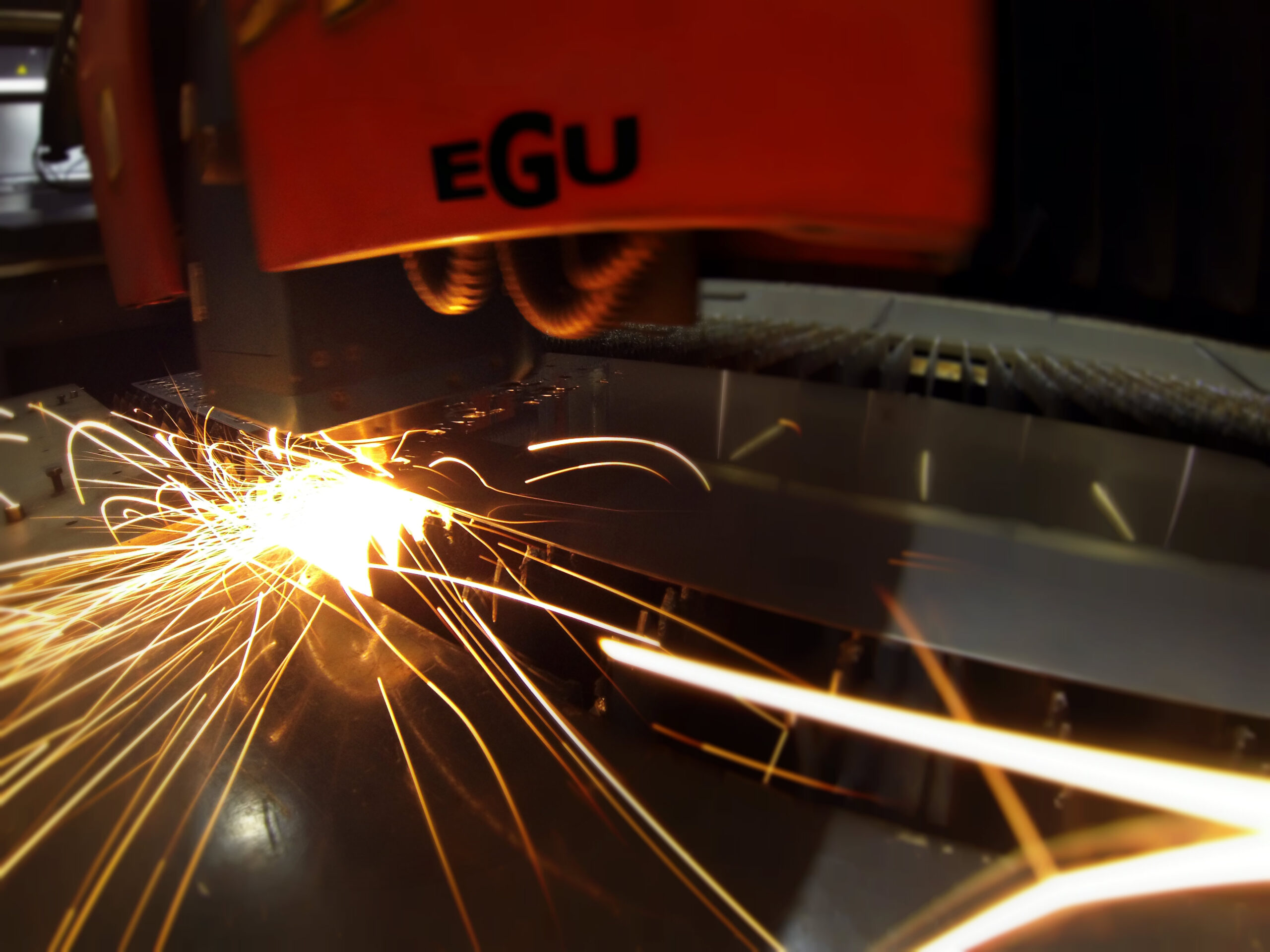
On a laser table the leftover web between parts is the skeleton. Bystronic’s ByCut 3015 data sheet lists a nominal sheet size of 3,000 mm by 1,500 mm and a cutting area of 3,126 mm by 1,600 mm. The extra millimetres of travel are not extra saleable parts. The nest still has to leave an unused border at the sheet edge, and every cut between neighbouring parts still consumes a slot. Bystronic’s Quality Cut package text states that a wider cut width makes parts easier to remove from thicker mild steel. A wider slot can change how the skeleton lets go. It still consumes area.
On an abrasive waterjet the slot follows the jet. OMAX’s MAXJET 5i MiniJet listing states a cut width between 0.020 inches and 0.025 inches for that nozzle. The same maker’s knowledge-base page on measuring abrasivejet kerf (version 32.8, dated 17 May 2021) says the kerf width can range from 0.021 inches to 0.060 inches depending on the nozzle, the thickness of the material, and wear on the mixing tube, and that the kerf is typically measured at its widest point. The strip between two nested plates is that measured slot, not the orifice number on the box.
Why a sheet count is not a bar count
A bar, a pipe, or an extrusion wastes length: the cutoff between pieces, plus the end that is too short to finish. That is a different count from a sheet nest. On a sheet the loss is area. The slots form a grid or a web. The unused border sits along the clamp or the uncut edge. The skeleton is what is left after the parts come out. Changing the kerf by a fraction of a millimetre does not always change the part count, but adding one more column of parts can fail because the extra column needs another full slot plus the border.
A laser nest of rectangles that ignores the slot will overstate yield. A saw ripping plywood into strips overstates the same way if the fence is spaced by the finished width only. The comparison that belongs here is sheet versus bar, not laser versus saw as a quality contest. Both remove a strip between pieces. The bar job never had a two-dimensional nest to over-pack. Do not copy a waste percent from an extrusion cutoff onto a sheet quote, and do not copy a sheet packing onto a bar.
A prototype hides the loss. One extra slot on one sheet looks small. The same missing column on every sheet in a production run is a stack of unfinished orders. Recount when the order quantity changes, even if the part drawing did not.
What to open before you trust the count
Open the blade, nozzle, or machine page you actually buy from, and the supplier page for the sheet you will load. Record the date. On 29 September 2026 the Freud LU80R012 page listed kerf .126 inches, plate .087 inches, diameter 12 inches, and 96 teeth. After a blade change, the old measured slot is no longer the slot. Write the SKU next to the job.
On the waterjet side, the MAXJET 5i MiniJet page states a cut width between 0.020 inches and 0.025 inches. That accessory sheet does not state the material, the thickness, the process, and the machine together. Until a coupon is cut in this plate on this cutter, leave the width blank on the nest record. A useful record names those four facts next to any width.
On the stock side, Metals Depot’s ASTM A36 plate page lists stock sizes including 4 ft × 8 ft and 5 ft × 10 ft, and notes that stock sizes may vary plus or minus 1/4 inch. That is the purchased rectangle, not a promise of how many parts fit. Bystronic’s ByCut 3015 nominal sheet is 3,000 mm by 1,500 mm; the ByCut 4020 nominal sheet is 4,000 mm by 2,000 mm. Do not convert either rectangle into a published part count for a standard sheet.
On the coupon, cut in the same material, thickness, process, and machine as the job. Measure the slot at its widest point, as OMAX states for abrasivejet work. On the nest, insert that strip between every pair of neighbouring parts, keep the unused border, and then count finished pieces. On the quote, the customer is paying for the sheet that was bought, not only for the area that ships as parts. Machine time is a separate line.
Fewer parts per sheet, or a different nest
The decision this topic turns on is fewer parts per sheet, or a different nest. If the measured strips and the unused border push one row or one column off the sheet, do not squeeze the parts by pretending the kerf is zero. Either drop the part count, re-space the nest, or buy a larger sheet if the supplier actually stocks it. Metals Depot lists 5 ft by 10 ft as another A36 size; that is a purchasing choice, not a reason to keep a false count on the 4 ft by 8 ft plate.
A nest that looks full can still be illegal for that stock if grain, a bend line, or a brushed face stops a part from rotating. That is a different limit from the kerf strip, and it still changes the finished count. If the four facts for the slot are not all known, leave the width blank and cut the coupon before the batch is released. Keep an offcut only when another part still fits on it. A strip too narrow to use is scrap. Do not add unusable remainder back into the finished-piece count.
A catalog kerf is not a sheet yield
The fact that belongs on a sheet job is this: counting rectangles on the sheet area overstates how many parts fit, because each cut between parts consumes a strip, and the clamp border and the skeleton change the count even when the catalog kerf stays the same.
Freud’s LU80R012 kerf of .126 inches is the maker’s figure for that 12-inch plywood blade. It is not a yield. Two sheets of the same named plywood can still give different finished counts if the unused border, the nest rotation, or the measured slot changes. Bystronic’s note that a wider cut width eases part removal is a handling fact about the skeleton, not a licence to ignore the slot when you count pieces. OMAX’s MiniJet band of 0.020 inches to 0.025 inches is a nozzle listing; that maker’s kerf page states that mixing-tube wear moves the slot. After a nozzle or mixing-tube change, recount the nest from a new coupon.
The count that makes the quote short
The action that makes the count, the quote, or the batch wrong is packing finished-part rectangles onto the sheet area and treating that packing as the yield. That count ignores every strip the cutter removes, ignores the unused border, and ignores the skeleton. The quote then understates the stock that had to be bought. The shop runs out of parts before the order is finished, or a second sheet is opened that the estimate never paid for. Recount with the slots in, or do not release the nest.
Read next: How nesting changes yield when parts cannot spin freely · What trim, the skeleton, and the edge margin cost on a sheet