Cut a Test Coupon Before a Kerf Number Goes on a Batch
Measure a test coupon in the same material, thickness, and machine as the job before a kerf number is used on a batch.
A kerf number on a nest is a count of stock the cutter will throw away as a slot. Before that number is used on a batch of sheet metal, plywood, acrylic, plate, or bar, cut a small coupon on the same machine, in the same material and thickness as the job, and measure the slot. A blade listing, a nozzle chart, or a photograph from another shop is not that measurement.
The record that belongs on the coupon
What is being counted
The slot the cutter removes from the coupon — the strip of wood, metal, acrylic, or stone that will not become a finished part, and that will repeat between parts on the batch. Opened 29 September 2026.
What is not being counted
The finished size on the drawing, a joint clearance after the cut, a later bend or grind allowance, or a width copied from a forum post, a product photo, or a video. Opened 29 September 2026.
The measurement that decides it
A slot measured on a coupon cut in the same material, thickness, and machine as the job, at the same quality or feed the nest will use. ISO 9013:2017 defines kerf width at the upper edge of the cut; OMAX’s ProtoMAX help says to take the abrasivejet width at its widest point. Opened 29 September 2026.
What a catalog figure leaves out
The Diablo D0724X3 page lists a 0.059 in kerf for that 7-1/4 inch, 24-tooth wood framing blade. Hypertherm’s Powermax SYNC cut charts give an approximate kerf for each amperage and thickness at best-quality settings as a guideline. OMAX states an abrasivejet slot from 0.021 in to 0.060 in depending on nozzle, thickness, and mixing-tube wear. None of those listings is the slot in this sheet on this cutter. Opened 29 September 2026.
Check before the batch or the quote
Write material, thickness, process, machine, and the measured slot on one line. If one of the first four is missing, leave the width blank. Opened 29 September 2026.
Last checked
29 September 2026.
What the coupon cut is actually removing
Kerf is the slot the cutter removes. It is not the finished part size on the drawing. On a circular saw the teeth sweep a toothed slot through plywood or a solid-wood blank. What you can point to afterward is the blade, the sheet edge, the offcut, and a strip of dust that used to be stock. On a laser the beam and assist gas open a kerf through sheet metal or acrylic; the skeleton stays on the slats. On a plasma table the arc burns a void through steel plate. On a waterjet the mixing tube focuses water and abrasive into a jet that erodes a slot through plate, stone, or composite.
ISO 9013:2017, the thermal-cutting classification standard, defines kerf width as the width of the cut at the upper edge, or immediately below melted top edge, as caused by the cutting jet. The same document names a top kerf width and a bottom kerf width. A coupon is only a measurement if you record which face the caliper sat on. The standard’s scope covers flame cuts from 3 mm to 300 mm, plasma cuts from 0.5 mm to 150 mm, and laser cuts from 0.5 mm to 32 mm. Waterjet and saw slots sit outside that thermal list; they still leave a slot you can measure, but you do not borrow an ISO 9013 quality class and call it a kerf database.
OMAX’s ProtoMAX help, opened 29 September 2026, states that the abrasivejet kerf is the width of material being removed as the jet cuts the part, that the width can range from 0.021 in to 0.060 in depending on the nozzle, the thickness of the workpiece, and wear on the mixing tube, and that the width is typically measured at its widest point. That is a maker’s description of the slot, not a license to copy 0.040 in onto every waterjet nest in the shop.
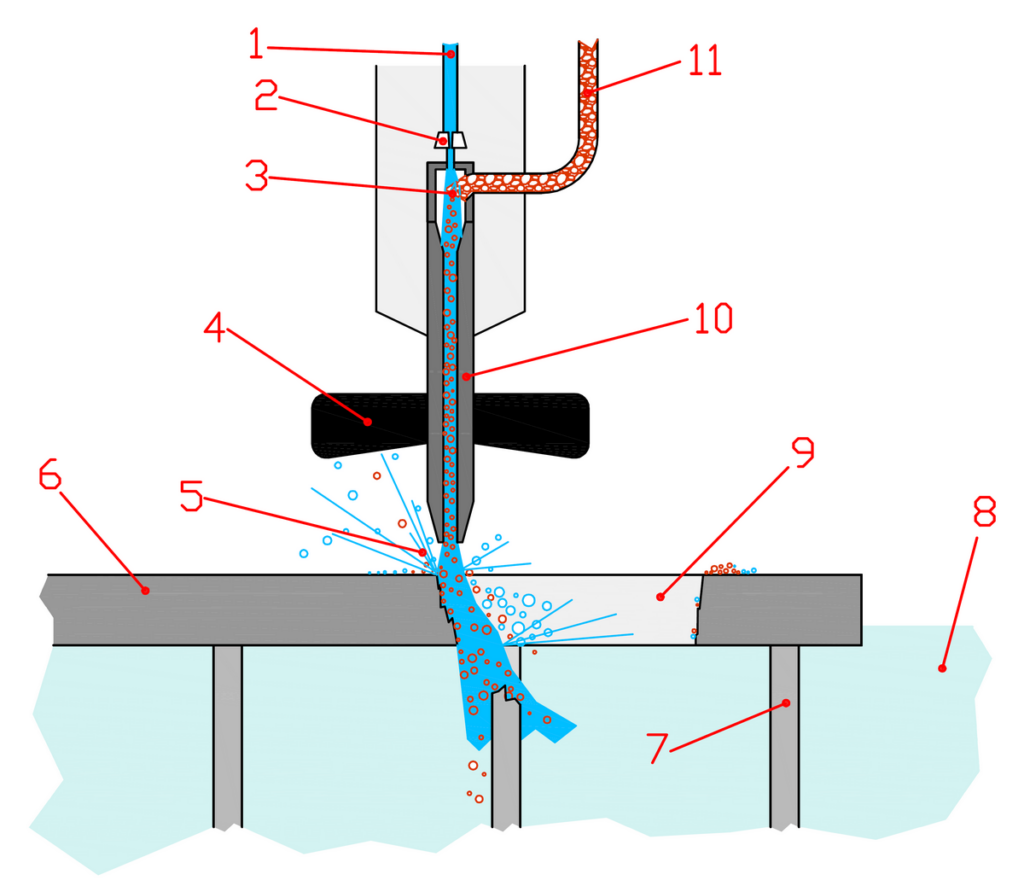
Diagram: Márton Kiss-Albert, CC BY-SA 3.0, via Wikimedia Commons. License: https://creativecommons.org/licenses/by-sa/3.0/
Why a catalog listing fails this job differently
A catalog kerf and a coupon kerf fail in opposite directions. The listing is the maker’s figure for a blade, a nozzle, a cartridge, or a mixing tube. The coupon is the slot that actually opened in this stock on this machine. Treating the listing as the slot is the error this article is for. Treating one thickness’s coupon as the next thickness’s coupon is a different error; thickness still changes the slot when the material name stays the same, and that case is covered on its own page.
Diablo’s current D0724X3 product page names a 7-1/4 inch by 24-tooth wood framing blade and lists kerf as 0.059 in. That figure belongs next to that SKU. It does not tell you the slot your saw will leave in 18 mm plywood after the blade has been run, resharpened, or fitted on a different arbor. After a blade change, the old measured kerf is no longer the slot.
Hypertherm’s Powermax SYNC machine-side reference (document 898110, revision 2) says cut charts provide an approximate kerf width for each amperage and thickness at best-quality settings as a guideline, and that book specifications are a starting point whose results vary with the table, the CNC, and height control. Hypertherm’s cut-angularity article gives a separate estimating rule: multiply the nozzle orifice by 1.5. Its example is a 200 A air nozzle with a 0.086 in orifice, which it puts at about 0.129 in of kerf. The same page then says operators estimate or physically measure, cut test pieces, measure those pieces, and adjust compensation until the part is the size the drawing requires. The chart and the orifice rule are starting points. The test piece is the measurement.
OMAX’s help page makes the same split for waterjet. It tells the operator to measure kerf on a test part cut at the same Quality setting and in the same material as the real part, and it states that kerf width is a function of speed: a slower nozzle (a higher quality number) makes a wider kerf. A coupon cut at a slow quality setting is not the slot for a fast production nest on the same sheet.
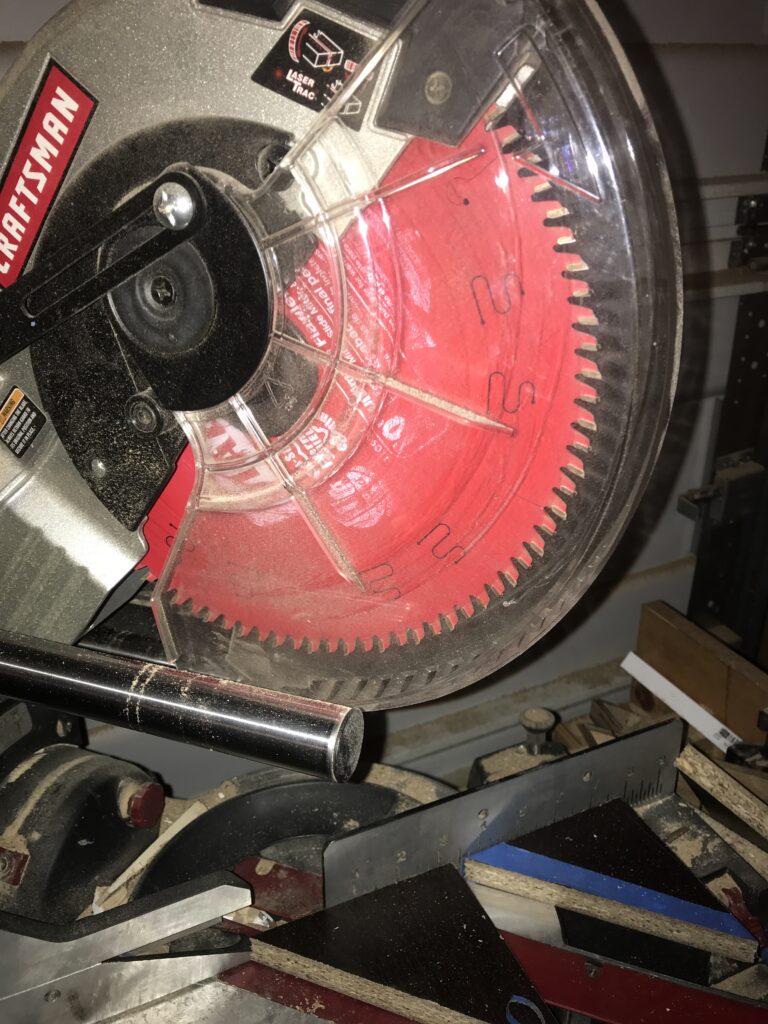
Photo: Atomicdragon136, CC BY 4.0, via Wikimedia Commons. License: https://creativecommons.org/licenses/by/4.0/
What to look for on the spec sheet and on the coupon
Open the maker page for the consumable actually in the machine, not a roundup and not a marketplace listing. On 29 September 2026 the pages used for numbers in this article were the Diablo D0724X3 specification, OMAX’s ProtoMAX “Measuring the Abrasivejet Kerf” help, Hypertherm’s Powermax SYNC machine-side reference, Hypertherm’s cut-angularity article, and the ISO 9013:2017 text for the definition of kerf width.
On the spec sheet, look for a width that is tied to a named blade, nozzle, or cartridge, and for any note that the figure is a listing, a guideline, or a starting point. On the coupon, look for a slot you can put a caliper across. Write five facts next to that reading: material, thickness, process, machine, and the measured slot. If the process is thermal cutting, add which face you measured, because ISO 9013 distinguishes top kerf from bottom kerf. If the process is waterjet, add the quality or speed used on the coupon, because OMAX ties width to that setting and to mixing-tube wear.
A useful record states material, thickness, process, and machine. If one of the four is missing, the width stays blank. One millimetre copied onto every page is not a kerf database. A forum post, a product photo, or a still from a video is not a coupon. Those sources do not name this lot of stock, this thickness, this cutter, and this consumable together.
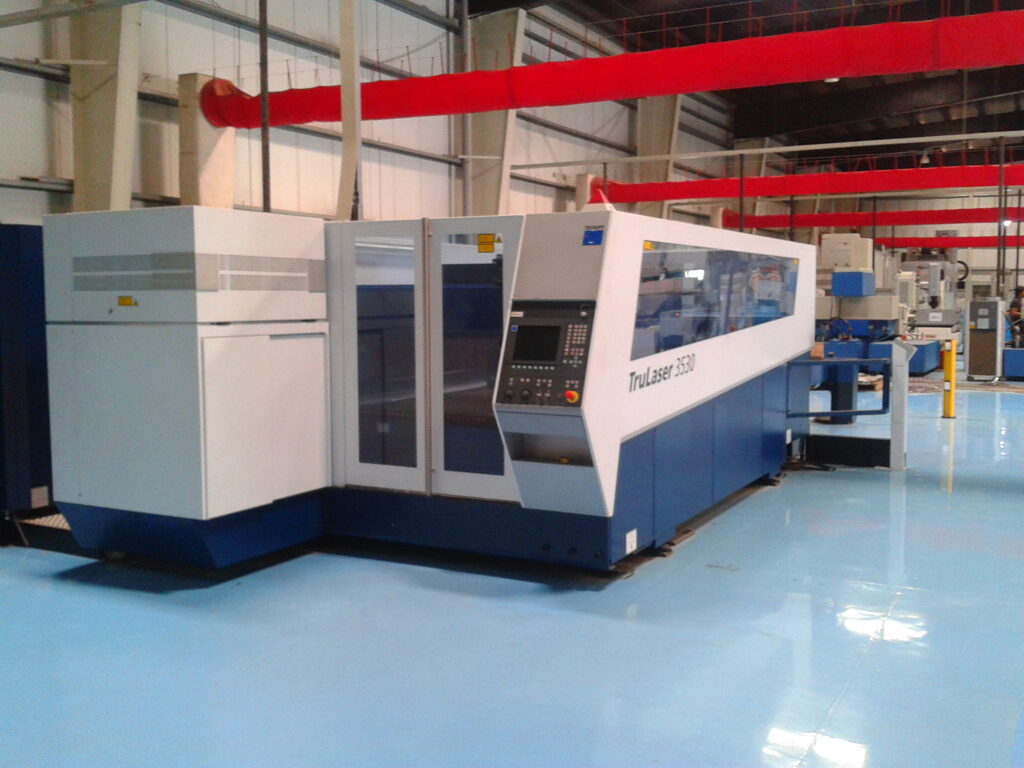
Photo: S zillayali, CC BY 3.0, via Wikimedia Commons. License: https://creativecommons.org/licenses/by/3.0/
The decision before the nest, the quote, or the batch
Remeasure on a coupon before the nest is released, before the quote is sent, and again after a blade, nozzle, mixing tube, lens, or cartridge change. Leave the width blank when the four facts are not all known. Do not fill the blank from a catalog so the nest software has something to chew on.
If the coupon slot is wider than the listing you almost used, the nest that used the listing will claim more parts per sheet than this machine can actually separate. Each extra cut still consumes a strip, and counting rectangles on the sheet area overstates how many parts fit. If the coupon slot is narrower than the listing, the listing was wasting space you still had — but the first part will come out large until compensation uses the measured slot. Either way, the coupon is the number the batch is allowed to carry.
Do not treat the coupon as a bend deduction, a press-fit, or a machining allowance. Those are later numbers. The coupon only answers how much stock this cut removes.
The spread that one coupon is meant to pin down
OMAX’s published abrasivejet band of 0.021 in to 0.060 in is already a 0.039 in spread on one process family, driven by nozzle, thickness, and mixing-tube wear. Hypertherm’s example of about 0.129 in for one 200 A air plasma nozzle sits in a different band. Diablo’s listed 0.059 in on the D0724X3 is a third figure on a wood-cutting blade. Those three numbers cannot stand in for one another. Each one is attached to a named page, a named process, and a named consumable. The coupon exists so this machine’s reading can be written beside those four facts instead of being borrowed from a page that never saw this sheet.
ISO 9013’s split between top kerf and bottom kerf is the other fact that belongs on the coupon for a thermal cut. A tapered plasma or laser slot can be wide on one face and narrow on the other. A single caliper bite on the shiny face, recorded without saying which face it was, is not a width you can load into a nest that has to hold both faces of the part.
The mistake that wrecks the batch
Loading a catalog kerf, a screenshot, or another shop’s number into the nest and releasing the batch. The part count per sheet is then wrong, and the first piece off the machine is the first proof. The coupon is cheaper than that sheet.
Read next: How to read a blade, nozzle, or lens listing for kerf · Why thickness changes the cut even when the material name stays the same