Choose a laser, waterjet, plasma, or saw by the edge the next operation needs
Pick a laser, waterjet, plasma, or saw by waste width, leftover edge, and thickness each process can finish—not by which cutter is fastest.
The slot a laser, a plasma arc, a waterjet, or a saw removes from sheet metal, acrylic, stone, or wood is only the first loss. What stays on the part is a heat-affected edge, a tapered wall, a wet abrasive face, or a mechanical tooth slot, and that leftover decides whether the next mill, weld, tap, or paint can use the blank as cut. Before the nest or the quote, compare waste width, edge condition, and the thickness that process can finish on this stock—not which table is fastest on a brochure.
Answer box
What is being counted
The leftover on the part after the slot is cut: a heat-affected laser or plasma edge, a tapered waterjet or plasma wall, a wet abrasive face, or a toothed mechanical slot. Opened 29 September 2026 on TRUMPF, Hypertherm, OMAX, and Diablo listings.
What is not being counted
Machine time, gas or abrasive cost, and how many parts fit on the sheet once kerf, clamp border, and skeleton are subtracted.
The measurement that decides it
Whether the next operation can use the face as cut, plus the slot width measured on a coupon in the same material, thickness, process, and machine.
What a catalog figure leaves out
A laser kerf listed under 0.5 mm, a plasma orifice rule of thumb, a mixing-tube kerf of 0.015 in or 0.020 in, or a blade kerf of 0.071 in is the maker’s figure for that consumable. The slot in this sheet, and whether the face is square, hardened, wet, or toothed, is a different measurement.
Check before the batch or the quote
Cut a coupon, measure the slot, look at the face, and write material, thickness, process, and machine next to the width. If the next operation cannot use that face, change process or add the later-operation allowance back onto the blank.
Last checked
29 September 2026.
What each cutter leaves on the part
Kerf is the slot the cutter removes. It is not the finished part size on the drawing. The four leftovers below are what remains on the part after that slot is gone.
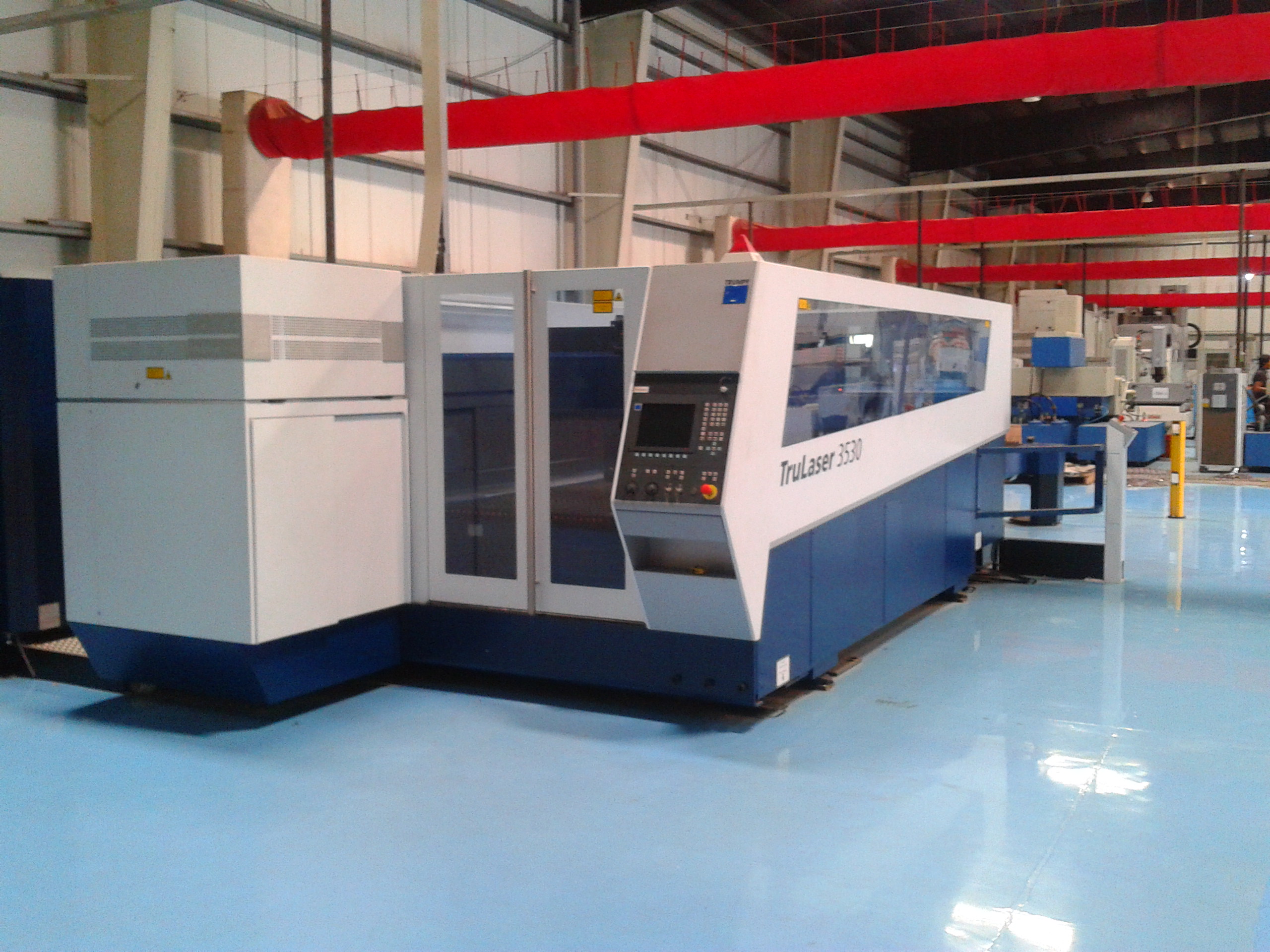
A laser melts and blows a narrow slot. TRUMPF’s technology comparison, opened 29 September 2026, lists a laser kerf smaller than 0.5 mm and a sheet-thickness range from 0.5 mm to over 30 mm. Hypertherm, writing on the same date about fiber laser on mild steel with oxygen, puts that kerf roughly at 0.2 mm to 0.4 mm (0.008–0.015 in), and even narrower with nitrogen, on mild steel up to 25 mm (1 in) thick. The leftover is heat: a recast face and a band of metal whose properties changed even though it never left the sheet. That band is the heat-affected edge. A later mill or tap that expected parent-metal hardness is working a different material than the drawing named.

A plasma arc is a thicker, hotter column through the same sheet. Hypertherm’s cut-angularity page defines kerf as the void the plasma process creates and gives a maker rule of thumb: multiply the nozzle orifice by 1.5. Their example is a 200 amp air nozzle with an orifice of 0.086 in, which they estimate at about 0.129 in of kerf. On the XPR300 article they state plasma kerfs can range from 1.5 mm (0.05 in) on very thin metal up to about 5 mm (0.225 in) on 25 mm (1 in) plate at 300 amps. Conventional plasma, they write, typically leaves 1–3 degrees of bevel on the “good” side of the cut and 3–8 degrees on the “bad” side. TRUMPF lists plasma kerf at 1 mm to 4 mm and computer-controlled plasma thickness up to 150 mm. The leftover is a heat-affected, often beveled wall, plus dross a later operation may have to grind. A fast plasma pass is not the same thing as an edge the next welder or mill can use.
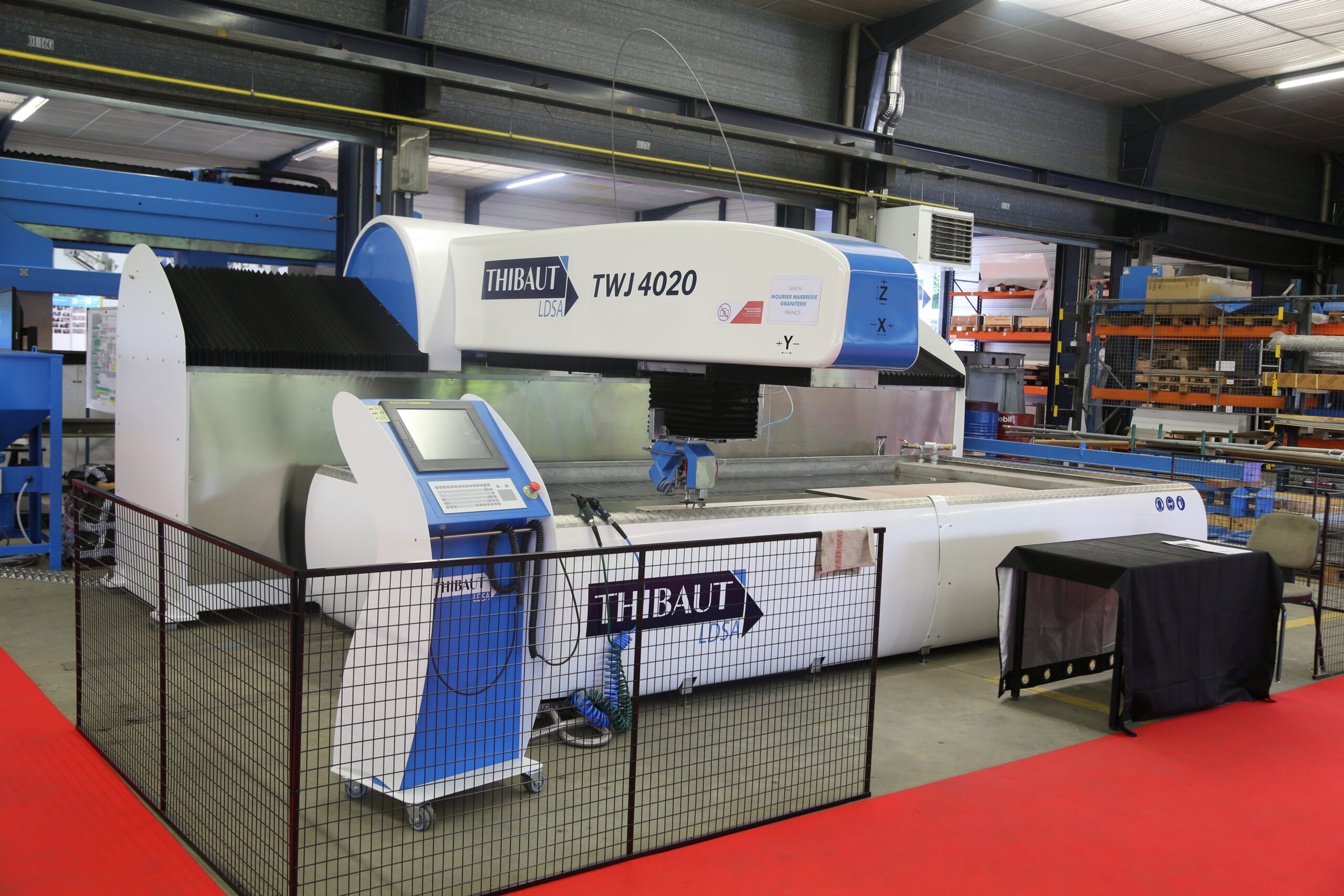
A waterjet does not melt the sheet. OMAX describes abrasive waterjet machining as a cold cutting process that creates no heat-affected zone and does not leave a heat-hardened edge. The tool is a jet of water and garnet leaving the mixing tube; the leftover is a wet, abrasive-eroded wall. OMAX’s FAQs put the Mini-Jet kerf at 0.020 in (0.5 mm) and the 7/15 MAXJET5 nozzle at 0.015 in (0.38 mm). That wall can taper. OMAX’s taper page states that a V-shaped kerf makes the top of the part narrower than the bottom, that the reverse can also be true, and that even the same parameters change taper between straight lines and arcs. Near-zero taper, they write, can require a very slow cutting speed unless the head is tilted to compensate. Most of their customers’ cutting is in material 3 inches thick or less; the high-level answer on the same FAQ page is that abrasive waterjets can cut 12 inches of most materials. The wet abrasive leftover is usable for many secondary operations precisely because it is not heat-hardened. It is still not a square catalog edge until the coupon shows it.

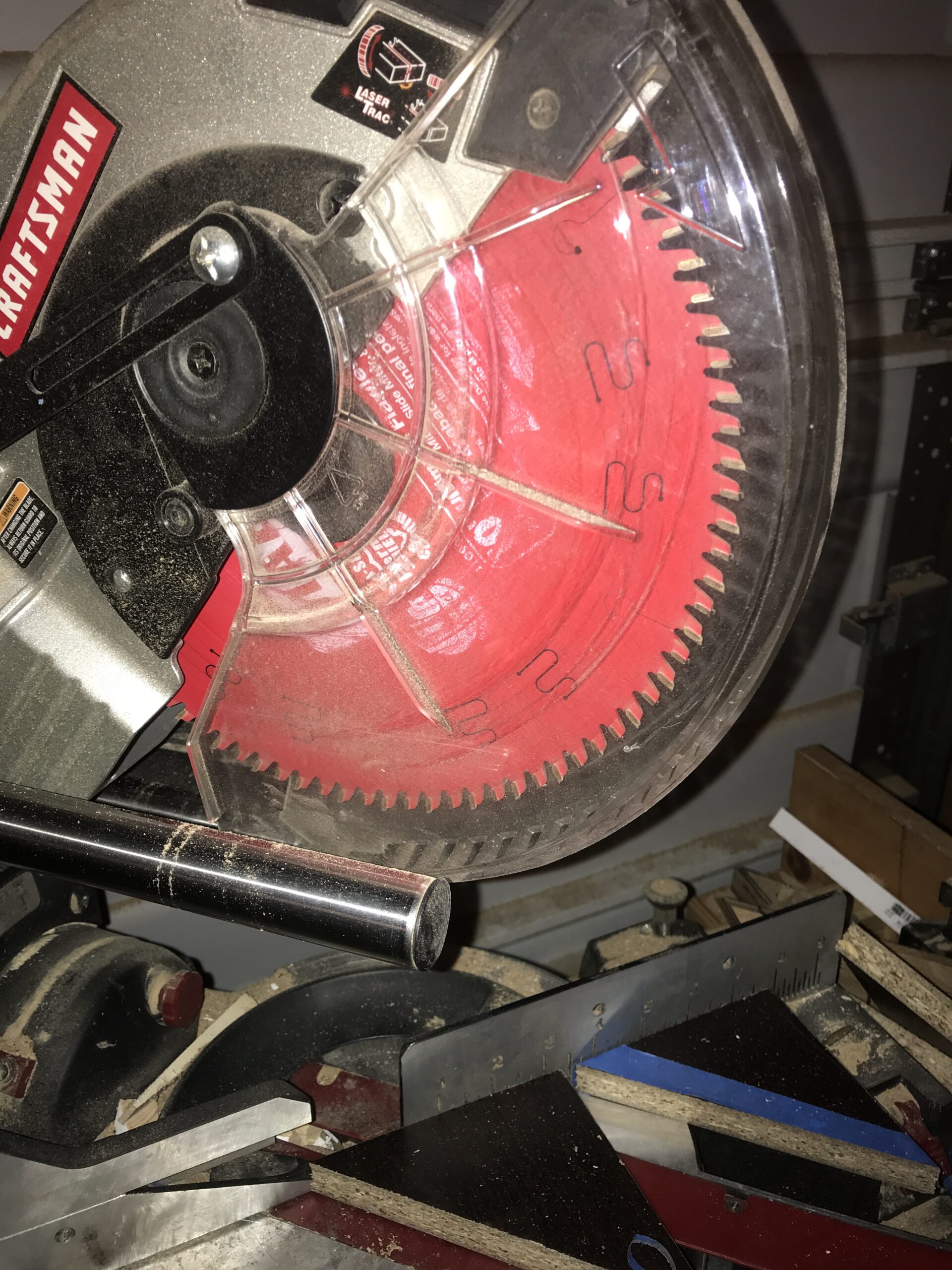
A saw is a toothed mechanical slot. It does not leave a thermal heat-affected zone. What it leaves is the width of the teeth plus the marks those teeth make on the cutoff. Diablo’s listing for the D0770F 7-1/4 in × 70-tooth Steel Demon carbide blade for thin metal, opened 29 September 2026, states a kerf of 0.071 in, a plate of 0.051 in, a 5/8 in arbor, and a −5° hook. That 0.071 in is the maker’s figure for that blade. The slot in this bar after the blade is dull, or after a different tooth count is mounted, is a different measurement. Point to the blade, the bar end, and the cutoff between lengths—not to a sheet skeleton—when the stock is a bar, a pipe, or a stick of extrusion.

How this job fails differently from counting the slot alone
The companion topic How a saw, a laser, a plasma arc, and a waterjet remove different amounts of stock counts how much stock the slot steals from the nest. This page counts whether the face that remains can go to the next operation. Those two losses do not move together.
A narrow laser kerf can raise the part count and still leave a heat-hardened edge that a mill has to take off. OMAX states that a laser heat-hardened edge is problematic for secondary operations, and that when a shop rough-cuts with a laser and finishes on a mill, that hardened edge has to be removed, which wastes material and slows the finish. The extra stock that mill still needs is not supplied by the kerf the laser already removed. That allowance belongs on the blank before the nest is locked. See What extra material a later bend or machining pass still needs.
A plasma cut can be faster on thick plate and still leave a bevel and a heat-affected wall the machinist cannot use. Hypertherm states that on material thicker than 10 mm (3/8 in), a 170 amp X-Definition process can deliver high-quality cuts at twice the speed of a 4 kW fiber laser using oxygen. The same maker says XPR170 and XPR300 surface finish is generally smoother than fiber laser in thicknesses over 16 mm (5/8 in). Speed on thick mild steel is not a verdict for thin stainless, for acrylic, or for a hole that still has to be tapped. TRUMPF separately notes that for plasma, the hole diameter for aluminum and stainless steel must be at least three times the sheet thickness for a reliable process. A process that is fast on the perimeter can still fail the next hole.
A waterjet can leave no heat-affected zone and still leave taper if the speed is wrong for that thickness. OMAX’s comparison table, opened 29 September 2026, marks heat-affected zone as none for waterjet and yes for laser and plasma, and lists waterjet thickness up to 24 in (61 cm). Their FAQ still warns that as thickness increases, the ease of holding precision decreases. A cold cut is not automatically a square cut.
A saw can leave no heat-affected zone and still take a 0.071 in strip on every cutoff of thin metal with the D0770F listing above. That is a length loss on a bar, not a sheet-skeleton loss. Do not paste a sheet-nesting waste percent onto a saw cutoff.
What to check on the spec sheet and the coupon
The pages opened on 29 September 2026 are TRUMPF’s laser–plasma–flame comparison, Hypertherm’s plasma-versus-laser page, Hypertherm’s cut-angularity page, Hypertherm’s XPR300 article, OMAX’s waterjet FAQs, OMAX’s taper-compensation note, OMAX’s waterjet-versus-other-methods table, and Diablo’s D0770F blade listing. Look for the four facts next to any width: material, thickness, process, and machine. If one of the four is missing, leave the width blank on the job card.
On a thermal-cut quote, look for whether the shop cites ISO 9013 angularity. Hypertherm states that ISO 9013 classifies a thermal cut’s deviation from perpendicular in ranges from 1 (least deviation) to 5 (most), and that X-Definition plasma on a capable machine delivers Range 2 on material less than 10 mm (3/8 in) thick and Range 3 on thicker material. That is Hypertherm’s claim for their process on their test plates, not a coupon from this table. A catalog range is not the face on this nest.
On a waterjet quote, look for the nozzle, not a generic “waterjet kerf.” OMAX lists 0.020 in for the Mini-Jet and 0.015 in for the 7/15 MAXJET5. After a mixing-tube change, the old measured kerf is no longer the slot. Their ProtoMAX measuring-kerf page, opened the same day, states that kerf width is a function of speed: a slower, higher-quality cut can widen the kerf and change taper, and that a kerf check must use a test part cut with the same quality and material as the job.
On a saw quote, look at kerf and plate on the exact blade. The D0770F 7-1/4 in × 70-tooth listing is 0.071 in kerf and 0.051 in plate for thin metal. A different diameter on the same product family lists a different kerf. After a blade change, remeasure.
The coupon is cut in the same material, thickness, and machine as the job. Measure the slot at its widest point. Look at the face: heat tint, recast, dross, top-to-bottom taper, wet garnet, or tooth marks. Caliper the first part. A forum post, a product photo, or a video is not that measurement.
The decision before the nest, the quote, or the batch
This topic turns on a different process because of the edge the next operation needs—or on adding the later-operation allowance back onto the blank if the process stays the same.
If the next pass is a tap, a mill, or a weld that cannot use a hardened or tapered face, do not buy the fastest cut and add a grind later in silence. Change process, or put the extra stock on the blank before the nest is priced. If the next pass only needs a weldable perimeter and the plate is thick, plasma’s wider kerf and heat-affected wall may still be the leftover the job can accept. If the stock is glass, stone, laminate, or a heat-sensitive alloy, OMAX’s comparison is that plasma and laser are thermal processes with a heat-affected zone and waterjet is not. If the stock is wood, plywood, or a cutoff on a bar, the saw’s mechanical slot is the leftover that matters, and a laser HAZ figure from mild steel does not transfer.
Do not declare one process the winner for every metal. Thickness changes the slot even when the material name stays the same. Hypertherm’s 1.5 mm plasma kerf on very thin metal is not the 5 mm figure they give for 25 mm plate at 300 amps. OMAX’s 3-inch typical waterjet job is not their 12-inch capability statement. A setting that worked on a thin sheet is not a setting for a thicker sheet. Measure again.
If material, thickness, process, and machine are not all known, leave the width blank. One millimetre copied onto every page is not a kerf database.
One fact that belongs to these four leftovers
Hypertherm’s XPR300 article states laser kerf on mild steel with oxygen is roughly 0.2 mm to 0.4 mm, while plasma kerfs can range from 1.5 mm on very thin metal up to about 5 mm on 25 mm plate at 300 amps. TRUMPF independently lists laser kerf under 0.5 mm and plasma kerf 1 mm to 4 mm. Those two maker pages agree that the plasma slot on metal is several times wider than the laser slot. They do not agree that the wider slot is always the worse leftover: Hypertherm also sells ISO Range 2 and Range 3 angularity, and a smoother face than fiber laser above 16 mm, as cut quality. The decision is still the edge the next operation needs, not which brochure won the kerf contest.
OMAX’s Mini-Jet 0.020 in (0.5 mm) sits near the wide end of that laser band and well below the plasma band. Diablo’s 0.071 in saw kerf on the D0770F thin-metal blade sits between a typical laser slot and a thick-plate plasma slot. None of those catalog widths is the coupon. A useful record names the material, the thickness, the process, and the machine next to the measured slot. Last checked is the date the source page was opened, which for every figure on this page is 29 September 2026.
The harmful mistake
Picking the process that finishes the nest first, then discovering the leftover edge cannot be welded, tapped, painted, or bent, and treating the grind or the remake as free. That action makes the quote wrong because the stock that had to be bought, the coupon, and the next operation were never compared on the same part. A fast process is not the same thing as an edge the next operation can use.
Read next: How a saw, a laser, a plasma arc, and a waterjet remove different amounts of stock. What extra material a later bend or machining pass still needs.