How nesting changes yield when parts cannot spin freely
Lock grain, brush, and bend direction before comparing two nests. A layout that looks full can still be illegal on the sheet you bought.
Why a full-looking nest can still lose parts
On a plywood panel, a stainless sheet, or an acrylic blank, a part that must keep one direction uses more of the sheet than the same outline allowed to spin. The loss is the extra skeleton and unused pockets that appear once grain, a brushed face, or a bend line forbids rotation. Lock that direction on the nest before the batch or the quote, then count finished pieces the stock can still give. Do not treat a nesting-software screenshot as proof of the best yield.
Answer box
What is being counted
Finished parts that remain legal on the sheet after grain, a brushed face, or a bend line stops free rotation, plus the leftover skeleton those locks leave behind.
What is not being counted
Machine time, a kerf width copied from another job, a waste percent taken from a bar or a coil, and any nest that was allowed to spin when the stock will not.
The measurement that decides it
Whether each part may rotate on the sheet, or must keep one axis: face grain, mill lay, or the bend line of the next press.
What a catalog figure leaves out
A mill width for polished or brushed stainless, such as Outokumpu’s listed maximum of 1524 mm for those finishes, does not say which rotations the job will allow on that coil or sheet.
Check before the batch or the quote
Write the direction lock on the nest, mark it on the drawing, and compare two layouts only after both use the same lock.
Last checked
29 September 2026
What the cutter still removes when parts cannot rotate
The cutter still takes a slot out of the sheet. A laser beam, a waterjet, a plasma arc, or a saw tooth leaves a gap between one part and the next. That gap, the clamp border, and the skeleton are still the material that does not ship as a part. A direction lock does not replace those losses. It changes how the outlines can sit around them.
When every part may spin, a long rectangle can fill a leftover strip by turning. When the same rectangle must keep the grain, the brush, or the bend line, that strip stays empty. The slot between neighbors is still there. The extra loss is the pocket that rotation would have used and that the material now forbids.
Name the pieces on the table. The nozzle or the blade makes the slot. The sheet edge is the mill edge or the cut edge you started with. The skeleton is the web left after the parts drop. An offcut is a remainder only if another legal part still fits on it with the same direction lock. A strip too narrow for that locked part is scrap, even if a spinning nest would have used it.


How a locked nest loses more than a kerf-only count
A count that only subtracts the kerf between packed rectangles still assumes the rectangles may turn. That is the count in How many finished pieces one sheet can give once the kerf is counted. This job fails in a different place. The kerf can be known and still the nest is illegal, because the stock will not accept the rotation that made the count look full.
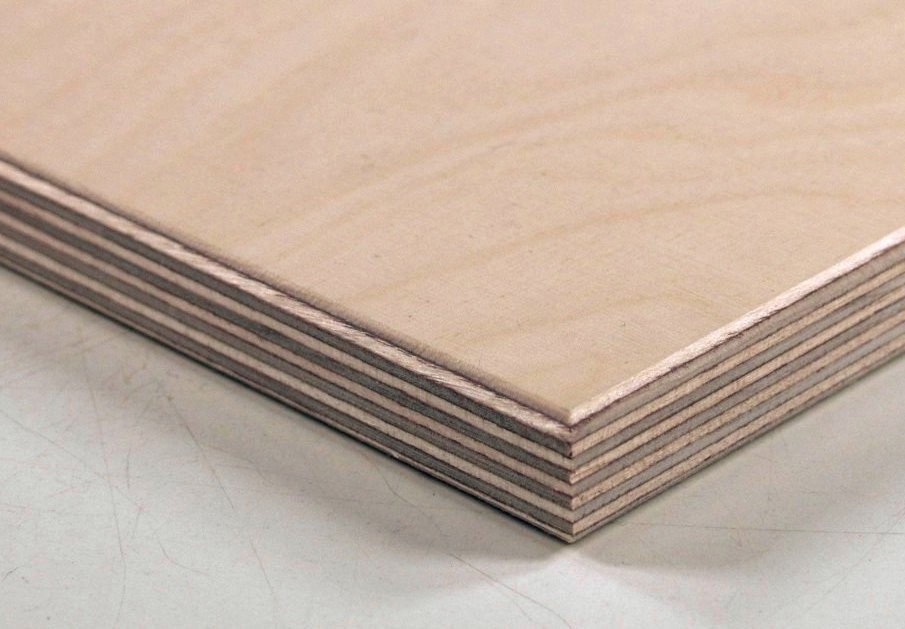
On structural plywood, the mill already treats direction as a property of the panel, not as a free choice on the nest. NIST Voluntary Product Standard PS 1-22 defines the major panel axis as the direction parallel to the grain of the face and back plies. It also states that plywood is built from an odd number of layers, with the grain of adjacent layers oriented perpendicular, and that the outer layers generally have their grain parallel to the long dimension of the panel. Grade rules in that same standard are written against 1220 mm by 2440 mm (48 in by 96 in) panels. A nest that spins a long part to fill the 1220 mm width is a different product from a nest that keeps face grain along the 2440 mm length. Both can look full on a screen. Only one matches the sheet that arrived.
On stainless, a brushed or polished face is a second lock. worldstainless describes ASTM No. 4 as a general-purpose bright polished finish obtained with a 120–150 mesh abrasive after coarser grinding. Outokumpu’s surface-finish brochure, citing ASTM A480/A480M, calls No. 4 a linearly textured finish whose average roughness may generally be up to 25 micro-inches, and it lists the matching EN 10088-2 designation 2J as a brushed or dull polished surface with unidirectional texture. A part rotated 90 degrees on that sheet does not keep the same face. The Specialty Steel Industry of North America notes, in the worldstainless special-finishes handbook, that rolled and polished finishes are directional, can differ slightly from one end of the coil to the other, and should be installed in the same direction to avoid a checkerboard effect. Mixing rotations on one nest is that checkerboard, cut into parts instead of installed as panels.
A bend line is a third lock. The later press still needs its own allowance on the blank; that allowance is not supplied by the slot the cutter already removed. What this article decides is only the axis: if the critical bend must sit across the mill grain or the rolling direction, the blank cannot spin to fill a leftover. Compare that constraint with What extra material a later bend or machining pass still needs before you add length. Do not publish a bend deduction here. The mill pages opened for this article do not state one for a named thickness.

What to check on the mill page, the sheet, and the nest
Open the current mill or standards page for the stock you will buy, not a nesting screenshot. On 29 September 2026 the pages opened were NIST PS 1-22 for plywood grain and panel size, Outokumpu’s cold-rolled sheet page and surface-finishes brochure for brushed stainless width and No. 4 / 2J texture, the worldstainless surface-treatment table and special-finishes handbook for No. 4 grit and directional installation, and ASME Y14.36 for how lay is designated on a drawing.
On a plywood stamp or a purchase spec, look for the face grain and the long dimension. PS 1-22 says the grain direction of the outer layers shall be either parallel or perpendicular to the long dimension of the panel. That is not a default you can guess from the 2440 mm length. Confirm which way the faces actually run on the sheets in the batch.
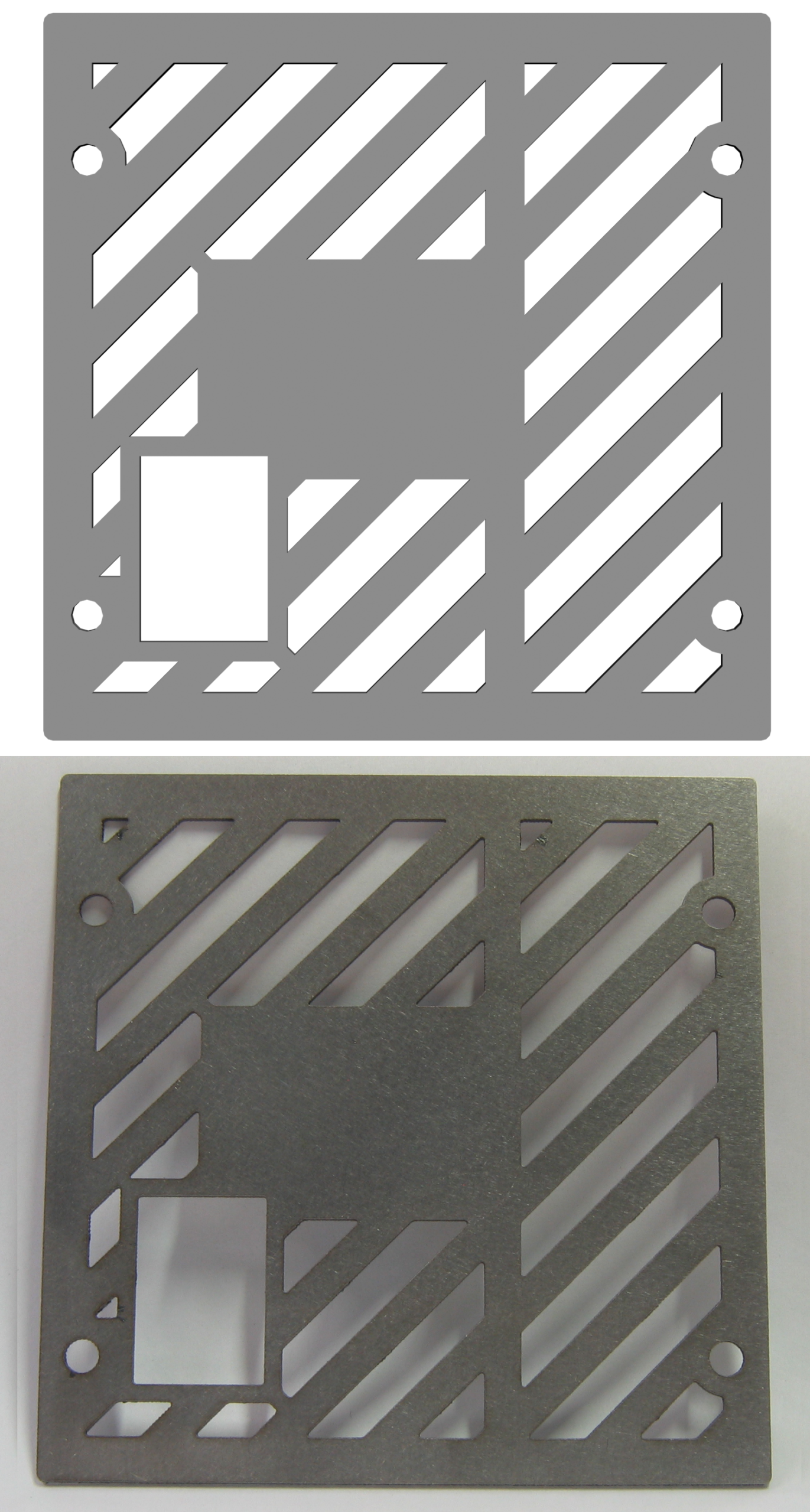
On stainless, look for the finish name and whether it is linear. A catalog width of 1524 mm for Outokumpu polished or brushed product, in the 0.5 mm to 4.0 mm thickness band listed on that mill page, tells you how wide the parent can be. It does not tell you that a part may turn. If the drawing needs a brushed lay, ASME Y14.36 exists to put roughness, waviness, and lay on the drawing with symbols. The standard does not produce the texture and does not measure it. It only records the direction the nest must keep.
On the nest itself, look for a rotation column or a grain arrow, not a utilization percentage. A layout that looks full with 90-degree and 180-degree spins is a different job from a layout with rotation locked at zero. Record material, thickness, process, and machine next to any kerf you later measure. If one of those four is missing, leave the width blank. The direction lock is a fifth fact for the nest, not a substitute for the slot.

The choice to make before two nests are compared
This topic turns on fewer legal parts per sheet, not on a tighter kerf. Keep the denser nest only when the drawing truly allows free rotation: no grain, no visible brush, no critical bend axis, no printed face, no nap on fabric. If any of those locks apply, discard the spinning count. Quote the locked count. Buy the extra sheets that count requires.
Do not compare a free-rotation screenshot with a locked nest and call the difference “efficiency.” Compare two nests only after both have the same lock, the same sheet size, and the same edge margin. If the mill can supply the sheet with face grain either way, choose the orientation that raises the legal count, then nest to that choice. If the coil already has a linear polish, you do not have that choice. You lock to the coil and you accept the lower yield.
If the four facts for a kerf are not known, leave the slot width blank and still lock the direction. A missing kerf does not authorize a spinning nest. A missing direction note does not authorize the denser count.
One fact the mill already states about direction
PS 1-22 does not treat the two panel directions as the same structure. When a construction is qualified by performance testing, bending stiffness is evaluated both along and across the major panel axis, and bending strength is evaluated the same way. The major axis is the face-grain direction. A nest that turns a long plywood part to fill width is asking the panel to carry that part on the weaker of those two records unless the drawing says otherwise. That is a mill fact about the stock, not a setting in the nesting software.
On stainless the matching mill fact is the texture itself. EN 2J is unidirectional. ASTM No. 4 is linearly textured. worldstainless’s special-finishes notes add that a directional grain oriented horizontally collects more dirt, and that panels from the same section of coil should be grouped. Those statements are about the face you bought. They are not a utilization percentage from a nest plot.
The mistake that makes the quote count the wrong nest
The harmful mistake is to lock nothing, let the software spin every part, and then buy or quote from that count while the grain, the brushed face, or the bend line still has to be kept. The sheet will not yield those extra pieces. The skeleton will be larger than the plot. Parts that shipped with the brush running the wrong way, or with a bend along the mill grain, are not the parts on the drawing. Recount with the lock written first.
Read next: How many finished pieces one sheet can give once the kerf is counted · What extra material a later bend or machining pass still needs