How a Bar, Pipe, or Extrusion Wastes Length Instead of Sheet Area
Count saw cutoff and the leftover bar end on a linear cut list. A sheet nest is a different yield. Do not reuse one waste percent.
A bar, a pipe, or an extrusion is purchased as a stick of length. The loss that changes how many finished pieces you can ship is the cutoff the saw removes between those lengths, plus the leftover end that is too short to finish. Before the batch or the quote, write a linear cut list against the mill length you will actually receive, and count every saw pass. Do not borrow a waste figure from a sheet nest, and do not reuse one waste percent for every extrusion.
Answer box
- What is being counted: Finished lengths that fit on one mill stick after each saw cutoff, plus the leftover end that cannot make another finished length. Steel Supply, L.P. lists A500 rectangular tubing in 20 ft and 24 ft sticks, each a minimum of the stated length (opened 29 September 2026).
- What is not being counted: Sheet area, a nest skeleton, a clamp border on a plate, or one waste percent copied onto every profile and every wall thickness.
- The measurement that decides it: Mill stick length minus the sum of finished lengths minus the sum of saw cutoffs. 80/20 part 1010, a 1.00 in × 1.00 in 6063-T6 T-slot, lists a maximum length of 242 in on the product page (opened 29 September 2026).
- What a catalog figure leaves out: Diablo D0756F prints a kerf of 0.102 in for that 7-1/4 in, 56-tooth Steel Demon circular-saw blade. The same page limits mild-steel angle, flat bar, and channel to 1/8 in maximum wall. That printed width is not the slot in a thicker wall, a different alloy, or an aluminum extrusion, and it is not a coupon measurement on your saw (opened 29 September 2026).
- Check before the batch or the quote: Read the mill length on the supplier page for that stick. Read whether the blade listing names this material and this thickness. Then cut a coupon from the same bar on the same saw and measure the cutoff. If material, thickness, process, or machine is missing, leave the cutoff width blank.
- Last checked: 29 September 2026
The cutoff between lengths, and the end that will not finish
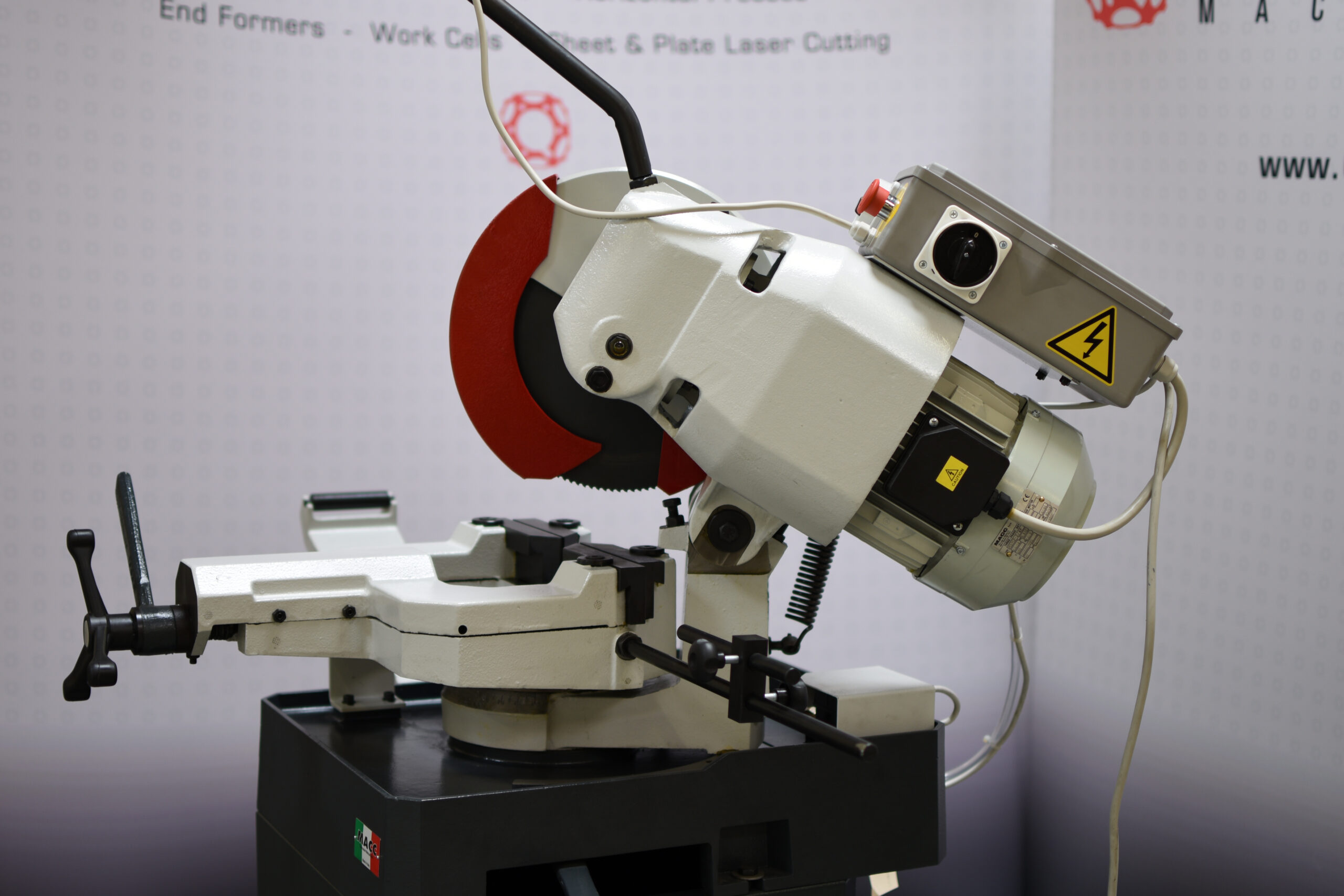
On a stick, the cutter is almost always a toothed blade: a cold saw, a metal-cutting circular saw, or a chop saw set up for that stock. Each pass opens a slot through the cross-section. That slot is the cutoff. It is length you paid for that never becomes a finished piece. The blade is the part you can point to. The faces it leaves on the two neighboring lengths are the cut ends. The short piece still in the vice after the last full length is the bar end, or drop.
The count is linear. If the mill end is already square and you do not recut it, n finished lengths still require n − 1 cutoffs between them. If the mill end is out of square, or the job requires a clean first face, you spend an extra pass before the first good length. If the last remainder is still longer than the finished length plus one more cutoff, you can take another piece. If it is shorter, that remainder is not a part. It is the end that is too short to finish.
Kerf is the slot the cutter removes. It is not the finished part length on the drawing. A blade listing that prints 0.102 in for Diablo D0756F is the maker’s figure for that consumable. The slot in a real bar is a different measurement. After a blade change, the old measured cutoff is no longer the slot.

A linear cut list is not a sheet nest
A sheet nest fails in area. Parts sit in a plane. Each cut between parts consumes a strip, and the clamp border and the skeleton change how many profiles fit even when the slot stays the same. That is the count in How many finished pieces one sheet can give once the kerf is counted. A bar, a pipe, or an extrusion does not have that skeleton. There is no rotation of a flat blank, no sheet edge margin, and no leftover web between nested holes. The stock has one usable axis: length.
That difference changes the paperwork. A sheet estimator who divides plate area by part area will overstate yield on a plate. The same habit on a stick is worse in a different way: dividing mill length by finished length ignores every cutoff and treats the leftover as if it were still a part. A 24 ft A500 stick is 288 in at the minimum stated length on the Steel Supply, L.P. page. Six 48 in finished lengths consume 288 in of part length on paper and look like a perfect multiple. They are not, because the five cutoffs between those six pieces have to come out of the same 288 in. The last remainder then has to be checked against 48 in. If it is short, the job needs another stick, not a note that “waste was zero.”
The leftover on a stick is still material only when another finished length, including its cutoff, fits on it. A stub too short to finish is scrap for this job. Do not call every remainder free stock. Whether that stub is worth keeping for a later, shorter part is a separate decision, the same distinction as How an offcut differs from scrap on a repeat job, except the test is length, not leftover sheet width.

What to read on the mill length and the blade page
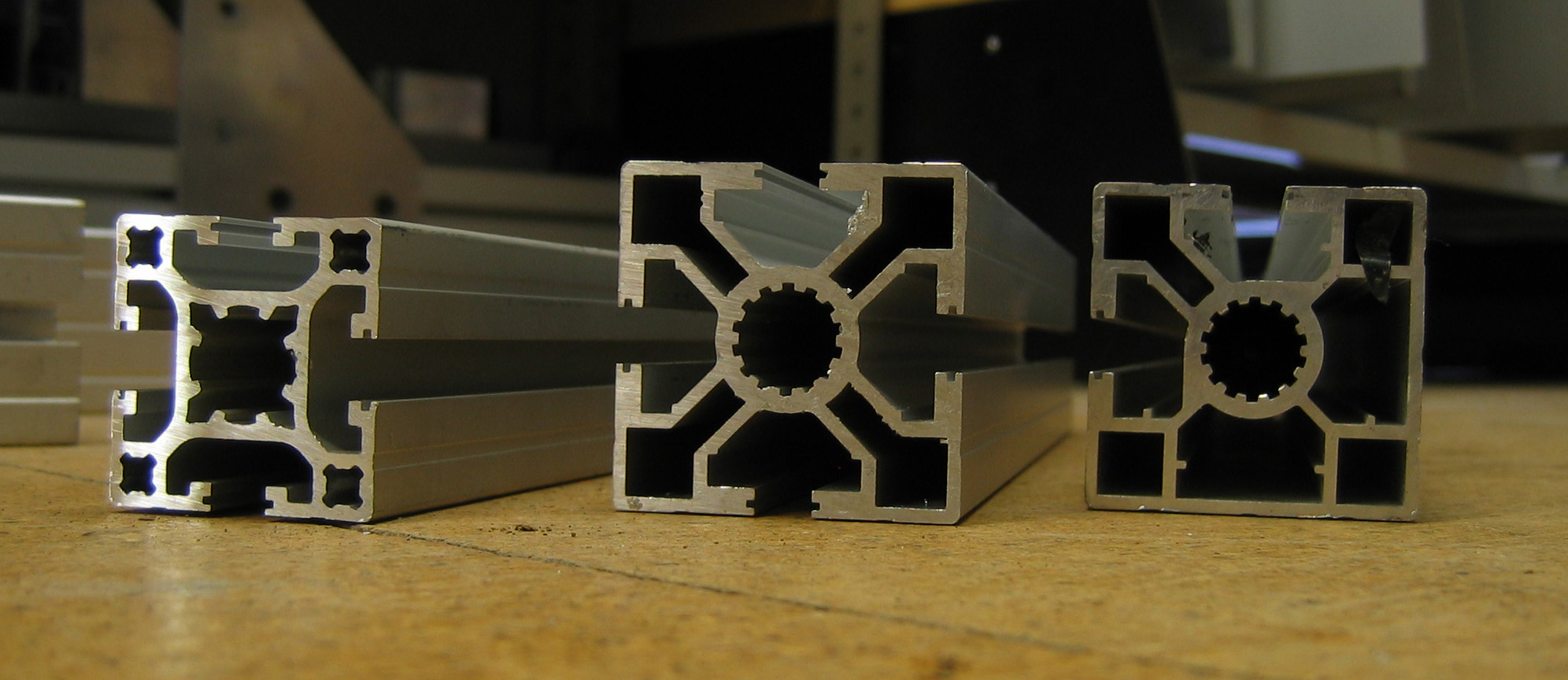
Open the supplier page for the stick you will buy, not a memory of “standard 20 ft.” On 29 September 2026 the 80/20 1010 page stated a maximum length of 242 in for that 6063-T6 T-slot. The same day, Wellste’s T-slot page stated that the standard length it produces is 6.01 m long bar stock, and it also packages long bars in a 3.0–6.0 m range. Those are not the same stick. 6.01 m is about 236.6 in. A cut list written for 242 in will not fit on 6.01 m, and a cut list written for 6.01 m wastes the extra inches on a 242 in bar only if you never use them. Steel Supply, L.P. sells A500 rectangular tubing in 20 ft and 24 ft lengths and states that each stick is a minimum of the stated length. A 20 ft minimum is 240 in. A 24 ft minimum is 288 in. The piece count for the same finished length changes when the mill length changes.
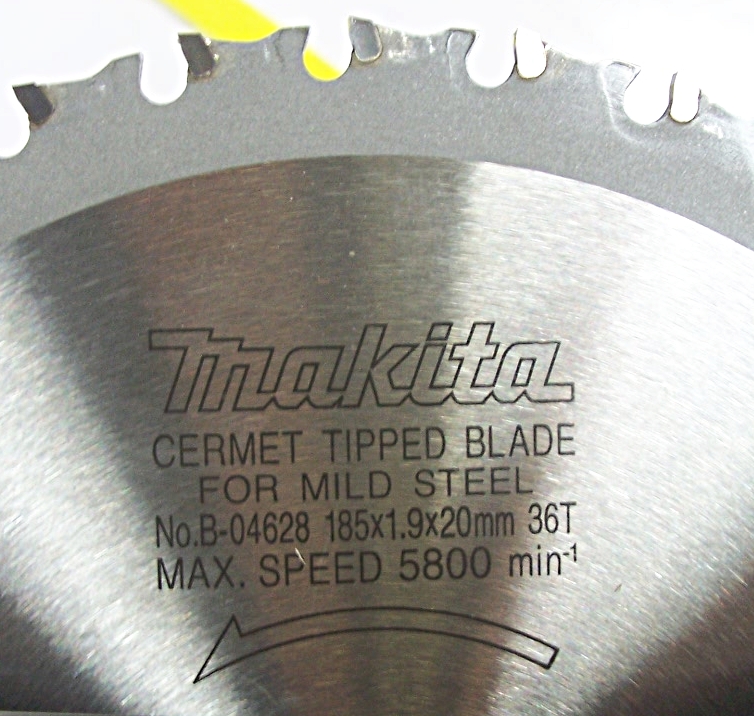
Then open the blade page for the saw you will use. On 29 September 2026 Diablo’s D0756F page listed a 7-1/4 in, 56-tooth carbide blade for thin metal, kerf 0.102 in, plate 0.087 in, for cordless or corded circular saws, and named steel studs, angle iron, flat bar, channel, EMT conduit, and all-thread, with mild-steel angle, flat bar, and channel limited to 1/8 in maximum wall and all-thread limited to 1 in maximum diameter. Diablo’s D0770F page listed a 7-1/4 in, 70-tooth blade with a printed kerf of 0.071 in, for mild steel only, 12 gauge or thinner. Those two printed widths already disagree. Neither page names 6063-T6 extrusion, A500 structural tube with a heavier wall, or a cold-saw machine model. A width is usable in the cut list only when material, thickness, process, and machine sit beside it. If one of the four is missing, the cutoff width stays blank until a coupon from this stock on this saw is measured.
A useful record names the alloy or grade, the cross-section or wall, the saw and blade, the mill length, the finished length, the measured cutoff, and how many mill ends were squared. A catalog row copied onto every extrusion is not that record.

Decide the cut list before you buy the sticks
The choice this topic turns on is how many mill sticks to buy, and which mill length to buy, once each cutoff and the leftover end are counted. Do not size the purchase from finished-part length alone. Do not size it from a sheet-nest waste percent. Write the finished lengths in order. Add a cutoff for every saw pass the job actually makes, including mill-end squaring if the first face has to be recut. If the remainder after the last full length is shorter than one more finished length plus one cutoff, that remainder does not reduce the number of sticks. Buy the next stick, or change the finished length, or change the mill length you order, before the quote goes out.
If the blade page does not name this stock and this thickness, do not put the printed kerf in the cut list. Cut a coupon, measure the slot, then lock the count. If you change blades, remeasure. The catalog figure is still useful as a warning that the slot is not zero. It is not a substitute for the coupon on a different wall or a different alloy.
Two mill lengths are not one waste percent
Take 36 in finished lengths as the order. On a 24 ft A500 stick at the 288 in minimum stated by Steel Supply, L.P., eight pieces would need 288 in of part length plus seven cutoffs between them if the mill ends stay as received. Using only the D0756F printed kerf of 0.102 in as a catalog warning, those seven cutoffs are 0.714 in, which already pushes eight 36 in pieces past 288 in. Seven pieces plus six cutoffs consume 252.612 in of that catalog arithmetic, and the leftover is 35.388 in. That leftover is shorter than 36 in, so it is not an eighth part. On a 20 ft stick at 240 in, six 36 in pieces consume 216 in before any cutoff; five catalog cutoffs of 0.102 in leave a remainder of 23.49 in, still too short for a seventh 36 in piece. The leftover fraction of the stick is not the same on 20 ft and on 24 ft, and it would change again if the finished length were 48 in instead of 36 in.
That is why a single waste percent cannot stand in for every extrusion. Wellste’s 6.01 m standard bar and 80/20’s 242 in maximum on part 1010 are different purchased lengths for T-slot that looks similar in cross-section. Six 1 000 mm finished lengths on 6.01 m leave 10 mm before any cutoff is subtracted. That 10 mm is already too short to finish a seventh 1 000 mm piece. The cutoffs between the six pieces still have to be measured on that aluminum and that saw; the D0756F page does not name this alloy, so the 0.102 in figure stays off that cut list until a coupon exists. The remainder after those measured cutoffs will not match the remainder on a 242 in 1010 bar cut to the same 1 000 mm parts. Report the leftover as length on that stick, not as a shop-wide percentage.
The count that fails the batch
The harmful mistake is to divide mill length by finished length, ignore every cutoff, and treat the leftover end as a free extra piece or as a universal waste percent for the next extrusion. That understates the sticks you must buy, overstates the pieces one bar will yield, and makes the quote wrong the first time the mill length or the saw blade changes.
Read next: How many finished pieces one sheet can give once the kerf is counted · How an offcut differs from scrap on a repeat job