Why Thickness Changes the Cut Even When the Material Name Stays the Same
A thicker sheet gives the blade, beam, or jet more distance to wander, taper, or heat. Measure a coupon at this thickness before you reuse an old kerf.
Mild steel, stainless, plywood, or acrylic can keep the same name while the sheet gets thicker. The slot the saw, laser, plasma arc, or waterjet removes is then a different loss. Before you nest, quote, or run the batch, cut a coupon in this thickness on this machine and measure the slot again. Do not reuse the offset that worked on the thin sheet.
Answer box
- What is being counted: The extra slot, taper, lag, or heat that appears when the same named stock is thicker, including a top width that no longer matches the bottom. Opened 29 September 2026.
- What is not being counted: The finished part size on the drawing, a later bend or grind allowance, and machine time as a separate quote line. Opened 29 September 2026.
- The measurement that decides it: A caliper reading of the slot in this material, this thickness, this process, and this machine, with the top and the bottom recorded if the face is not square. ISO 9013:2017 names those two widths separately. Opened 29 September 2026.
- What a catalog figure leaves out: Freud’s LU80R012 lists a 0.126 in blade kerf with no sheet thickness beside it. Hypertherm’s 200 A air-nozzle estimate (0.086 in orifice, about 0.129 in kerf) does not name a plate thickness. Opened 29 September 2026.
- Check before the batch or the quote: Cut a coupon in the same named stock at the job thickness, on the same cutter, then measure the slot before you keep the old allowance. Opened 29 September 2026.
- Last checked: 29 September 2026.
What the blade, beam, or jet is taking out of a thicker sheet
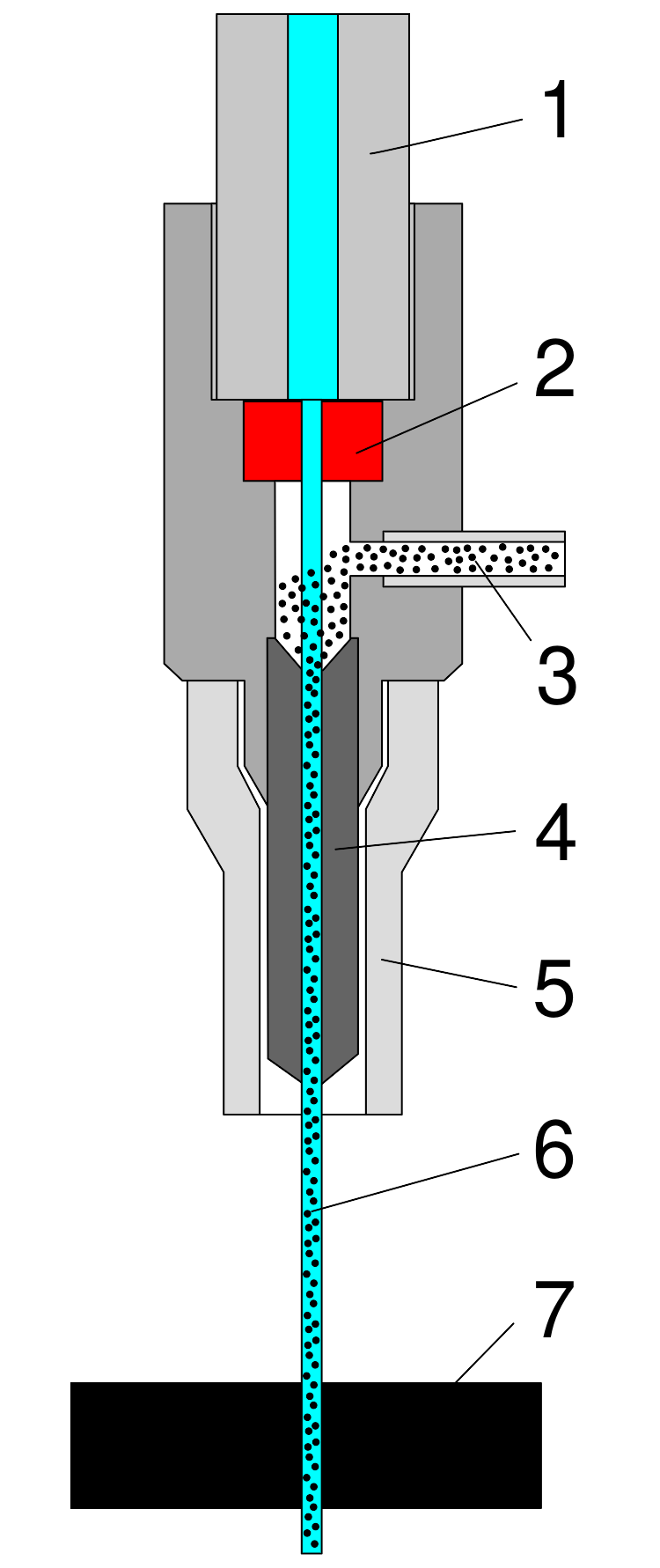
The loss you are counting is the strip the cutter removes, not the outline on the drawing. A toothed saw leaves a slot as wide as the teeth can throw chips. A laser beam melts or vaporizes a track and a gas jet blows it out. A plasma arc burns a void whose size follows the nozzle orifice and the column of the arc. An abrasive waterjet erodes a path as the mixing tube sends water and garnet through the plate.
On a thin sheet those tools travel a short distance from the entry face to the exit face. The slot can stay close to the width you programmed. On a thicker sheet the same tool has more distance in which to wander, taper, or dump heat. ISO 9013:2017, the thermal-cut classification opened on 29 September 2026, defines kerf width at the upper edge of the cut and then uses a second symbol for the width at the bottom. The standard also defines perpendicularity or angularity tolerance u as the distance between two parallel tangents that enclose the cut-surface profile. That definition only makes sense if you accept that the face through the thickness is not a single number.
You can point to the parts: the blade or the nozzle, the sheet edge, the skeleton left on the nest, and the offcut that may still hold another part. The coupon is a small piece of the same sheet. The slot you measure on it is the loss. The finished part size is a different record.
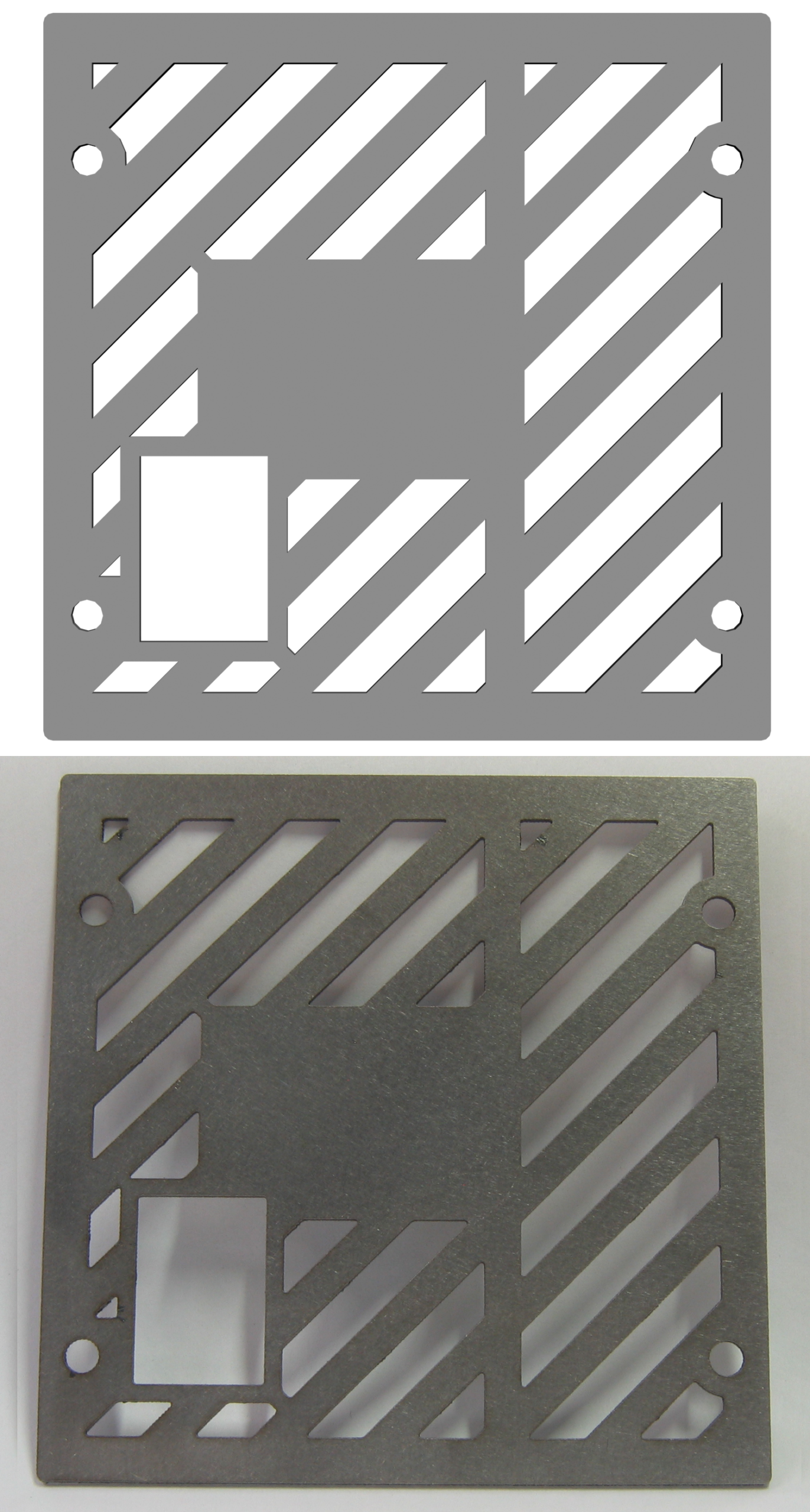
When a catalog width fails the thicker sheet
A catalog blade width or a nozzle-orifice estimate is the maker’s figure for that consumable. It is not the slot in your sheet. Freud’s LU80R012 plywood-and-melamine blade, opened on 29 September 2026, prints a 0.126 in kerf and a 0.087 in plate. The same page limits depth of cut from 1/4 in minimum to 1-5/8 in maximum. Two plywood sheets can still share a trade name while one sits near the thin end of that window and the other sits near the thick end. The printed 0.126 in does not tell you which sheet you have on the saw.
Hypertherm’s cut-angularity page, opened the same day, estimates plasma kerf by multiplying nozzle orifice by 1.5 and gives a 200 A air nozzle at 0.086 in orifice as about 0.129 in of kerf. That line names the nozzle. It does not name the plate thickness sitting under the torch. The hole-quality page on the same site treats a hole as small when its diameter is less than 1.5 times the material thickness, and it walks a 12 mm hole in 12 mm mild steel with a 100 A nozzle (1.5 mm / 0.059 in orifice, 2 mm / 0.089 in kerf). Change the thickness and the same hole name stops being the same problem.
That is a different failure from a test coupon that was actually cut in this material, this thickness, and this machine. The coupon can be wrong if you later change the nozzle or the blade. The catalog figure is already incomplete before the first cut, because thickness never sat beside the width. How a kerf allowance changes the size you program is a separate move on the toolpath. This page is only about refusing to carry the thin-sheet width onto the thick sheet.
What to check on the spec, the stamp, and the coupon
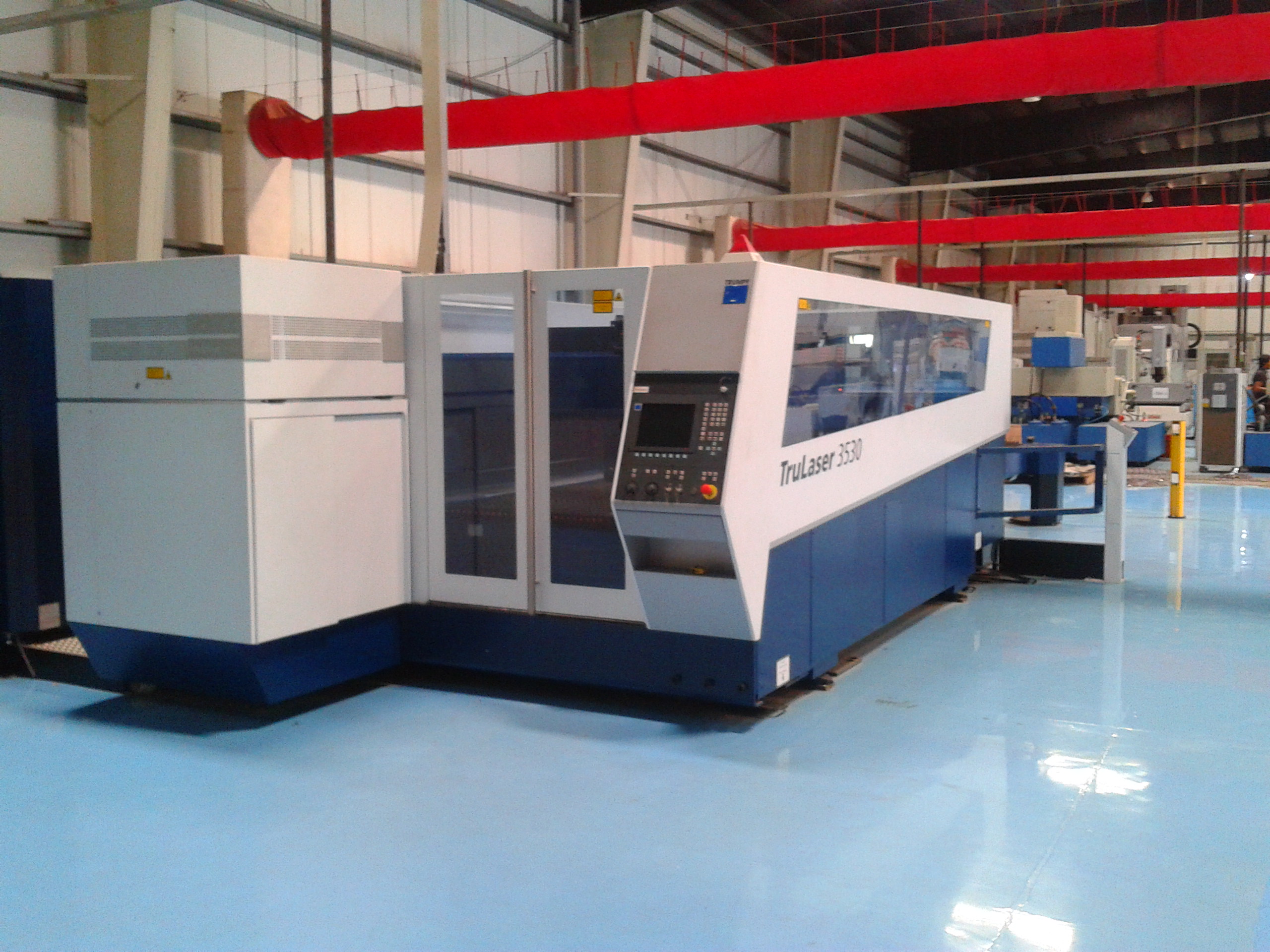
Open the machine page for the cutter you will use, not a roundup. TRUMPF’s TruLaser 3030 fiber specification, opened 29 September 2026, lists mild steel at 22 mm maximum for the TruFiber 4000 (4 kW) and 25 mm with the thick-sheet cutting package. The same machine family with the TruFiber 24001 (24 kW) lists mild steel at 40 mm, or 60 mm with that thick-sheet package. The material name is still mild steel. The thickness the laser is specified to cut is not. The same page describes CoolLine as a process that cools the workpiece so small contours can be cut in thick mild steel, and it states that these machines cut thin sheets especially quickly. Those are two jobs, not one setting.
OMAX’s tolerance guide, opened the same day, states that as thickness increases the jet loses energy through the cut, which causes stream lag and widening at the bottom of the kerf. The same page says mixing tubes wear over time and that wear increases kerf width. OMAX’s thick-material note, also opened 29 September 2026, says modern waterjet systems are optimized between 1/4 in and 3 in thick, and that the jet is narrower at the top and thicker at the bottom as it degrades. If your last measured slot was taken on 6 mm plate, it does not describe 40 mm plate of the same alloy.
On wood, APA’s trademark-stamp guide, opened 29 September 2026, separates Performance Category (a thickness range tied to the nominal thicknesses in the IBC and IRC) from the decimal thickness printed on the panel. That decimal is generally at or near the lower tolerance in the appendix of PS 1 or PS 2. Two sheets can share a plywood name and a Performance Category and still not be the same thickness in your caliper. Record the decimal on the stamp, then cut the coupon.
ISO 9013:2017 applies its laser classification from 0.5 mm to 32 mm, its plasma classification from 0.5 mm to 150 mm, and its flame classification from 3 mm to 300 mm. Table 3 in that standard sets the edge exclusion Δa used when measuring perpendicularity: 0.1a for cut thickness at or below 3 mm, then stepped millimetre values as thickness rises (1 mm between 10 mm and 20 mm, 1.5 mm between 20 mm and 40 mm). The measurement band itself changes with thickness. A useful shop record still names material, thickness, process, and machine next to any width. If one of the four is missing, leave the width blank.
The decision before you nest or quote
Remeasure on a coupon at this thickness. Do not copy the thin-sheet offset onto the nest. If the coupon shows a wider slot or a tapered face, fewer parts will fit on the sheet once every cut is counted, and the quote must buy that extra stock. If the four facts are not all known—material, thickness, process, and machine—leave the width blank and do not pretend a catalog 0.126 in or a 0.129 in nozzle estimate is the job.
If the next operation needs a square edge that this thickness will not give at the current process, that is a process change, not a kerf tweak. This page does not pick a winner among laser, waterjet, plasma, and saw. It only requires that the thickness on the traveler match the thickness on the coupon.
One thickness fact that belongs to this cut
ISO 9013:2017 does not treat the slot as one width through the plate. It gives a top kerf width and a bottom kerf width, and it measures how far the cut face leans by inscribing that face between two parallel tangents. OMAX states the waterjet version of the same geometry: more thickness, more energy lost, more lag, a wider bottom. Hypertherm states the plasma version of the hole rule: whether a hole is “small” is a ratio of diameter to thickness, so the same 12 mm hole is a different job in 4 mm plate than in 12 mm plate. Those are not interchangeable numbers. They are the reason the old allowance is retired when the sheet gets thicker.
The mistake that wrecks the count
Keeping the kerf offset from a thin sheet because the traveler still says “mild steel,” “stainless,” or “plywood.” The name did not change. The slot did. The nest then overstates how many parts fit, the quote understates the stock you have to buy, and the first part off the thick sheet fails the caliper.
Read next: What a test coupon is for before a kerf number is used on a batch · Why one kerf number cannot stand in for the whole job