How to read a blade, nozzle, or lens listing for kerf
The width printed on a blade, nozzle, or lens listing is the maker’s figure for that part. Measure the slot in your sheet after any consumable change.
A blade listing that prints a kerf, a waterjet listing that prints an orifice or a mixing-tube diameter, and a laser listing that prints a nozzle size or a lens focal length are sizes of the part you install. The loss in a plywood sheet, a steel plate, or an acrylic blank is the slot that same part leaves in that thickness on that machine. Read the printed width as the maker’s figure for that consumable, then cut a coupon after the blade, nozzle, mixing tube, or lens is changed before the nest or the quote uses a width.
Answer box
What is being counted: The maker’s printed size for that blade, nozzle, mixing tube, or lens, kept apart from the slot the same consumable leaves in a real sheet.
What is not being counted: The finished size on the drawing, a later bend or grind allowance, or the slot left by a different thickness or by the worn part that this listing replaced.
The measurement that decides it: The slot on a coupon cut in the same material, thickness, process, and machine, taken where that cut is actually widest.
What a catalog figure leaves out: ISO 9013:2017 defines kerf width as the cut at the upper edge caused by the cutting jet, and it records a top kerf width and a bottom kerf width. A listing that only prints tooth kerf, nozzle size, or focal length does not state those two measured widths in your sheet.
Check before the batch or the quote: After a blade, nozzle, mixing tube, or lens change, cut a coupon in the job stock and thickness. Do not carry the old measured slot onto the new consumable.
Last checked: 29 September 2026
What a blade, a nozzle, and a lens take out of the sheet
A circular saw removes a toothed slot. The steel body is the plate. The carbide tips sit proud of that plate, so the strip that becomes sawdust is closer to the tip width than to the plate. Diablo’s current listing for D0724X3, a 7-1/4 in, 24-tooth ATB framing blade with a 5/8 in arbor, prints a kerf of 0.059 in and a plate of 0.040 in. Those two numbers on one page are the reading job: the printed kerf is already wider than the body. Bosch’s Edge ferrous listing for DCB530, a 5-3/8 in, 30-tooth blade, prints the same split under different labels: width of cut (b1) 0.063 in and base blade thickness (b2) 0.04 in. Neither page names a plywood thickness or a saw model next to a measured slot.
A waterjet listing names the holes the stream passes through. OMAX’s ProtoMAX specification prints an orifice internal diameter of 0.008 in and a mixing tube 2.25 in (57.15 mm) long with a 0.030 in internal diameter. The knowledge-base page for that same nozzle names the replaceable mixing tube at 0.030 in (0.762 mm) and the drop-in orifice at 0.008 in (0.2032 mm). Water is forced through the orifice, abrasive is drawn in, and the slurry leaves through the mixing tube. Those diameters are the consumable. They are not the slot in a named aluminium plate after the tube has worn.
A laser nozzle listing prints the orifice the assist gas leaves through. Precitec’s shop listing for nozzle electrode DE KT X DD 1.0 names a 1.0 mm nozzle size, an M15x1 thread, and compatibility with the ProCutter 2.0 and ProCutter Zoom 2.0 heads. The sibling listing for DE KT X DD 2.0 names a 2.0 mm nozzle size on the same thread and head family. A focusing-lens listing prints a different family of numbers. Coherent’s ZnSe aspheric table lists model 796278 at 38.1 mm focal length and 27.94 mm diameter, model 684500 at 63.5 mm focal length and 27.94 mm diameter, and model 739932 at 127 mm focal length and 38.1 mm diameter. The meniscus table lists model 932739 at 63.5 mm focal length, 27.94 mm diameter, and 2.16 mm edge thickness. None of those lens rows prints a kerf in sheet metal, wood, or acrylic. The beam still has to leave a gap in the sheet; the lens page does not measure that gap.
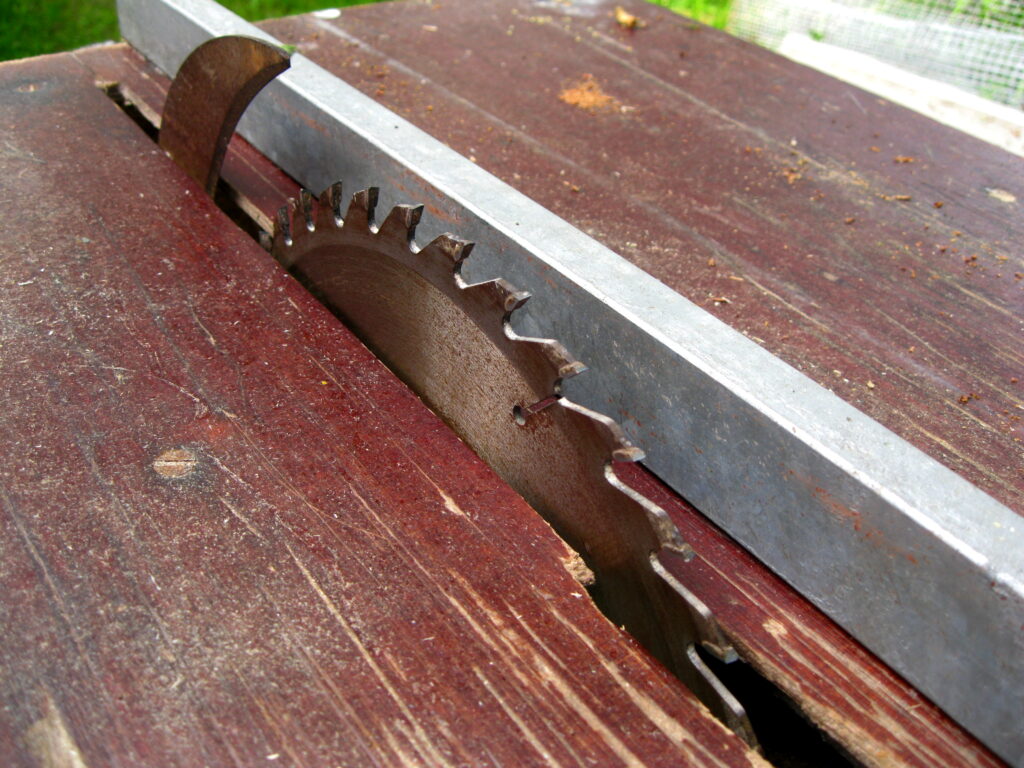
Photo: Santeri Viinamäki / Wikimedia Commons, CC BY-SA 4.0.
Why the catalog width and the coupon slot are different measurements
A catalog width fails by describing the part you buy. A coupon fails only when you skip it. They are not interchangeable, and they fail in opposite directions. Copying 0.059 in from the D0724X3 listing into a laser nest treats a wood-blade kerf as a thermal slot. Copying 1.0 mm from the Precitec nozzle listing into a saw program treats a gas orifice as a toothed strip. The listing did not claim either transfer.
Thickness changes the slot even when the material name stays the same. ISO 9013:2017 classifies thermal cuts for laser from 0.5 mm to 32 mm, plasma from 0.5 mm to 150 mm, and flame from 3 mm to 300 mm. The same standard records a top kerf width and a bottom kerf width as separate symbols. A 1.0 mm laser nozzle on a listing does not tell you which of those two widths a caliper will read on 2 mm stainless versus a thicker plate of the same grade. The coupon is the cut in the job thickness. The listing is not.
Some listings print no width at all. Hypertherm’s FineCut nozzle 220930 page states an operating range of 30 A to 45 A and fine-feature cutting on named Powermax systems. It does not print an orifice diameter and it does not print a kerf. Filling that blank with a millimetre from another shop is not a reading of the listing. It is a number the maker did not put on the page.
What to read on the listing, and what to measure after a change
Open the current specification for the blade, nozzle, mixing tube, or lens that is actually in the machine, and write the date. On the D0724X3 page the figures to copy into a parts record are the 0.059 in kerf and the 0.040 in plate, next to that SKU, not next to a laser head. On the Bosch DCB530 page the figures are width of cut 0.063 in and base thickness 0.04 in, next to that SKU. On the ProtoMAX machine page the figures are the 0.008 in orifice and the 0.030 in mixing-tube inside diameter, next to that machine. On the Precitec nozzle pages the figure is the named nozzle size, 1.0 mm or 2.0 mm, next to the head family. On the Coherent lens tables the figures are focal length, diameter, and, where printed, edge thickness. If a kerf column is missing, do not invent one from the focal length.
Then cut a coupon in the same material, thickness, and machine as the batch. Record those four facts next to the measured slot. A useful record states material, thickness, process, and machine. If one of the four is missing, the width stays blank. After the blade, nozzle, mixing tube, or lens is changed, the old measured kerf is no longer the slot. The listing for the new part tells you what was installed. It does not tell you the new slot.
The ProtoMAX specification also prints a maximum material thickness of 1.00 in (25 mm) and a cutting pressure of 30,000 PSI (2,068 bar). Those are machine limits and a pressure, not a kerf in every thickness up to that limit. A speed, power, or pressure figure is usable only when the material, the thickness, and the machine sit beside it. A mixing-tube diameter without those four facts is still only a hole in a tube.
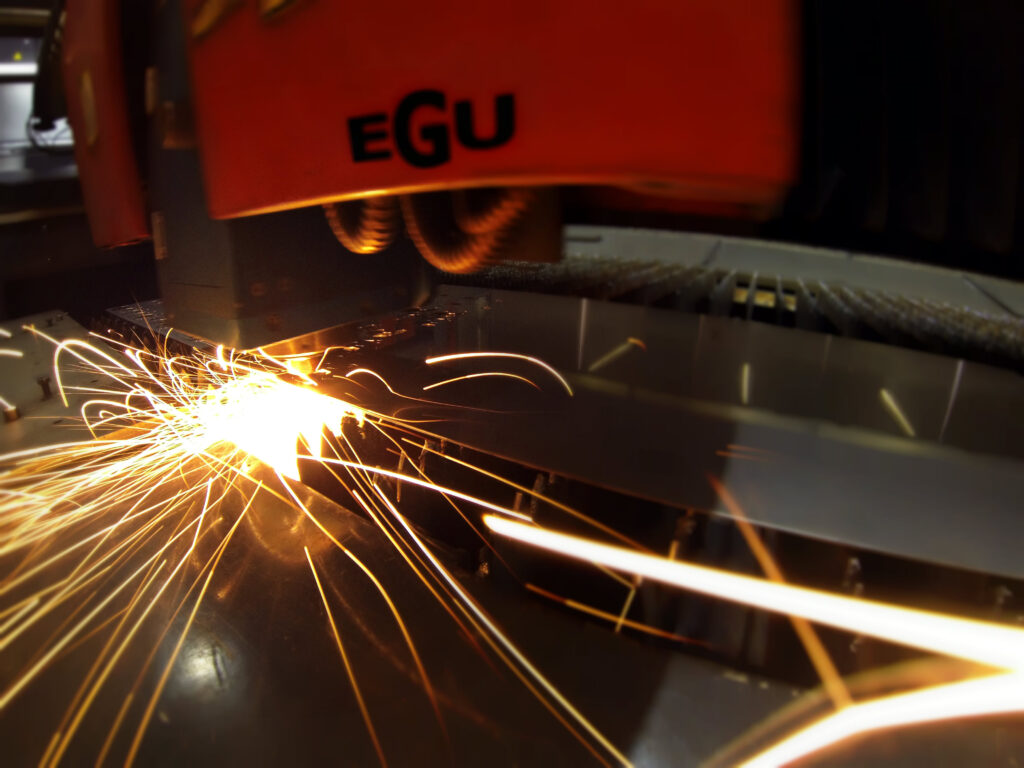
Photo: EGU-Metall / Wikimedia Commons, CC BY-SA 3.0.
When to retire the old width, and when to leave the field blank
The choice this topic turns on is whether the width in the nest, the quote, or the material table is remeasured after the consumable change. Remeasure on a coupon when the blade, nozzle, mixing tube, or lens that made the last coupon is no longer the part in the head. Leave the width blank when the material, the thickness, the process, or the machine is not known. Do not fill a blank from a listing that never stated those four facts together.
Keep the printed number in the tooling record. That record answers what was installed. The coupon answers what left the sheet. Mixing the two is how a 0.059 in wood-blade kerf lands in a waterjet offset field. The printed figure can stay on the purchase line. It does not belong in the slot field until a coupon in this stock, this thickness, this process, and this machine has been measured.
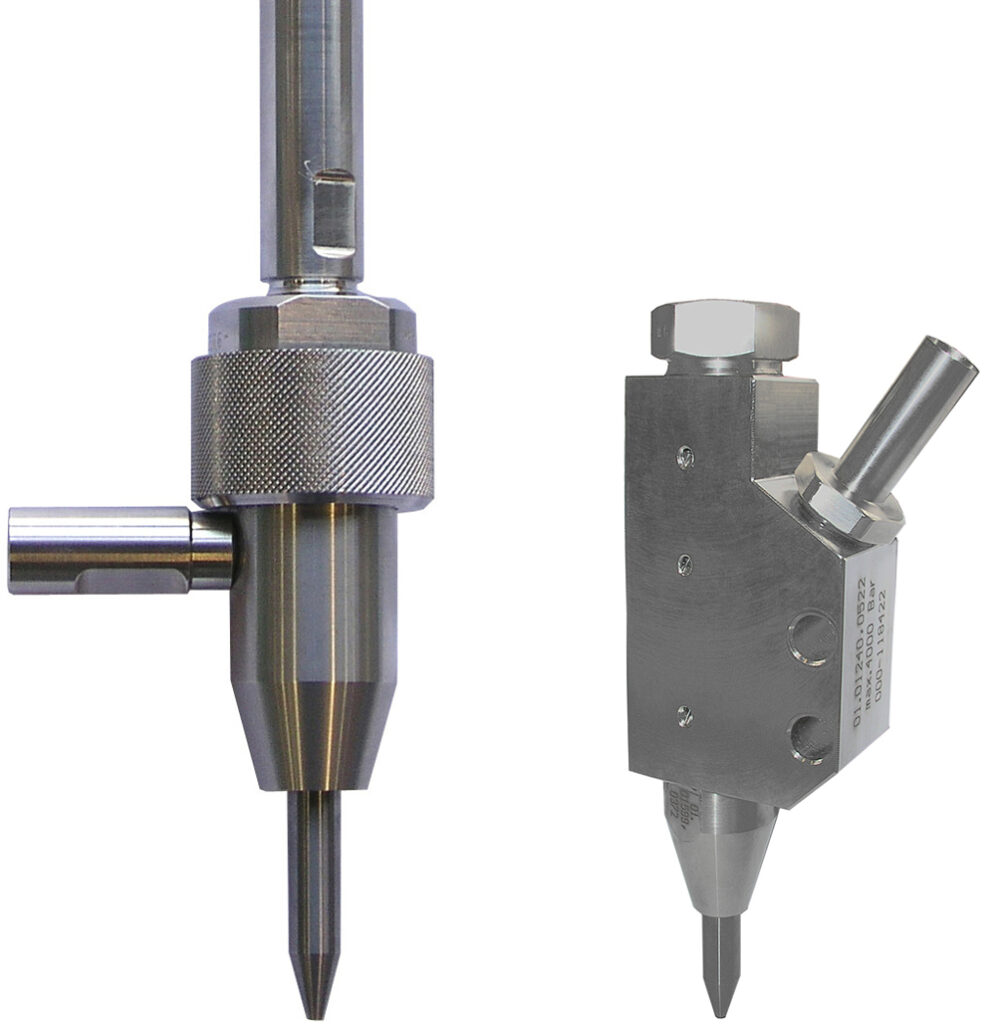
Photo: Hammelmann / Wikimedia Commons, CC BY-SA 3.0.
The listing prints a part size, not a slot in every thickness
On the D0724X3 page the printed kerf is 0.019 in wider than the printed plate. That difference is on the consumable the maker is selling. It is not an extra allowance that a thicker sheet will add, and it is not a measured slot in framing lumber or in sheet metal. Bosch’s DCB530 listing shows a similar split: 0.063 in width of cut against 0.04 in body. Read both columns. Do not treat the body thickness as the kerf, and do not treat the printed width of cut as the slot in every ferrous thickness that blade might see.
The Precitec 1.0 mm and 2.0 mm listings are two orifice sizes for the same head family. Doubling the named nozzle size is a change of the gas opening. It is not a published doubling of kerf in every mild-steel thickness. The Coherent 63.5 mm and 127 mm focal lengths are two lens choices. Changing focal length changes the focus geometry the maker is selling. It does not print the slot those lenses will leave in 3 mm acrylic or in 10 mm steel. If the four facts are not all on the page, the width in the job record stays blank.
The mistake that keeps last month’s slot
The harmful mistake is to type the printed kerf, nozzle size, mixing-tube diameter, or focal length into the nest as if it were the measured slot in every thickness, and then to keep that number after the blade, nozzle, mixing tube, or lens is changed. The listing described the part that arrived in the box. The coupon describes the strip that left the sheet. After a change, the old coupon describes a consumable that is no longer in the machine. Recut the coupon in the job material and thickness before the batch or the quote uses a width.
Read next: What a test coupon is for before a kerf number is used on a batch · Why thickness changes the cut even when the material name stays the same