What a slit roll keeps, and what the trim throws away
A slit roll ships only the finished width. Count edge trim, mill ends, and leftover tails against the parent roll before you quote.
A slitter does not ship the parent roll. It ships finished lanes wound on new cores. The loss to count before the quote is the edge trim, the mill end or leftover tail that never becomes a finished roll, and any leftover strip too narrow to rewind as product. Measure the parent width against every finished width on the order, then decide what leftover is scrap before you buy the coil or the jumbo.
Answer box
- What is being counted
- The parent-roll width and length that do not rewind as finished slit rolls: edge trim, leftover lanes that cannot be sold, and mill ends or leftover tails. Opened 29 September 2026 on the British Stainless Steel Association summary of ISO 9444-2 and on a duplex slitter specification that lists edge trim as part of working width.
- What is not being counted
- A sheet skeleton, a clamp border, or one waste percent for paper, film, or labels. Not applicable as a single percent. Opened 29 September 2026; no maker or standards page opened for this article states a trim percent for those stocks.
- The measurement that decides it
- Finished slit width versus parent-roll width, plus the mill-end length that thickness tolerance does not cover. For continuously hot-rolled stainless wide strip, ISO 9444-2 as summarised by BSSA sets that uncropped length at L = 90 / t millimetres, with a maximum of 20 metres per coil (t is specified thickness in millimetres). Opened 29 September 2026.
- What a catalog figure leaves out
- A duplex slitter listing of 20 mm minimum slit width, 1,050–1,850 mm working width, and parent diameters of 1,000–1,200 mm does not tell you how much edge trim this parent roll will throw for this lane layout. Opened 29 September 2026 on Honghui Machinery’s duplex precision slitting equipment page.
- Check before the batch or the quote
- Parent-roll width and diameter, every finished lane width, whether the coil is mill-edge or cut-edge, core inside diameter, and the mill-end or leftover-tail length. Opened 29 September 2026 on SSAB COR-TEN A hot-rolled (coil and slit coil) and on the same slitter specification.
- Last checked
- 29 September 2026.
What the slitter removes from the parent web
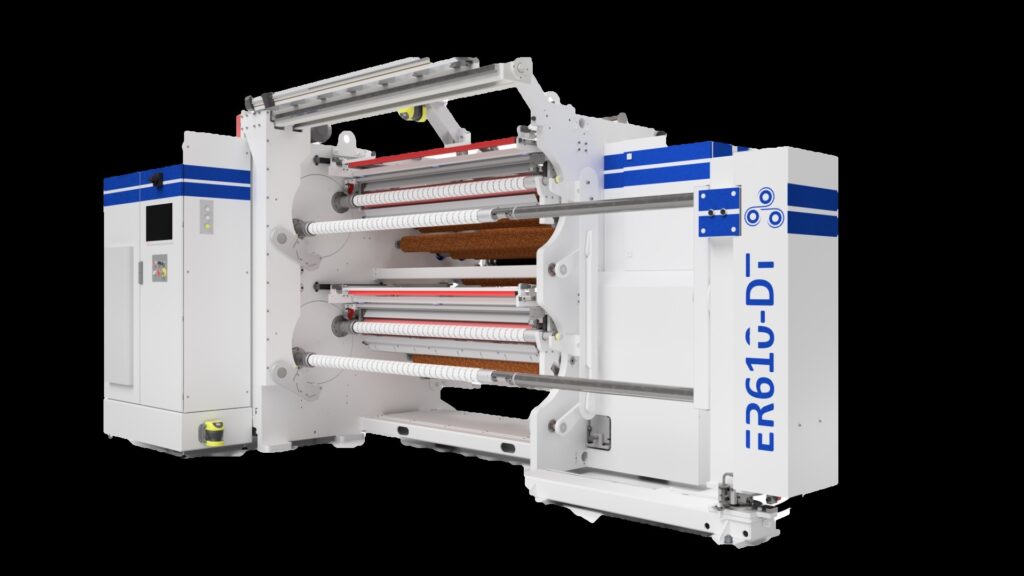
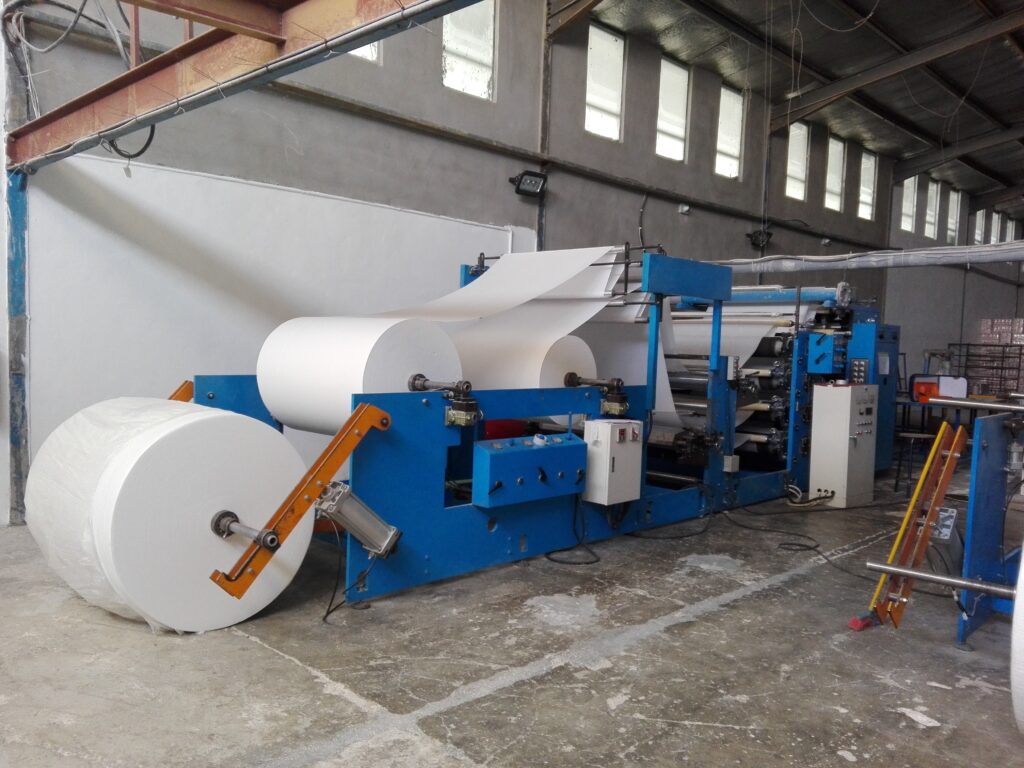
The parent roll sits on the unwind. The web is guided, then cut along its length by knives, then rewound onto new cores as narrower rolls. A duplex slitter-rewinder is built for that sequence: unwind, web guide, longitudinal slit, rewind. The parts you can point to on the line are the parent roll, the knives, the edge-trim takeoff, the finished rolls, and the cores.
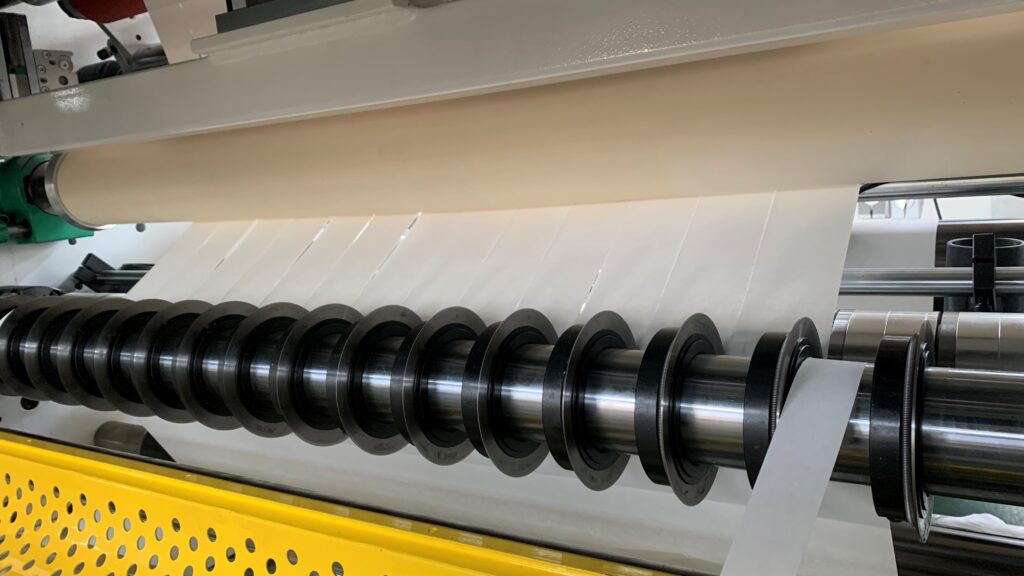
The cut is a slit edge, not a toothed saw slot across a bar and not a sheet nest. Razor or shear knives are selected for the substrate. Knife position sets finished web width. Edge trim is the strip taken from the sides so the remaining lanes can be held to a finished width. Between lanes the knives also take a narrow slot. That slot is real loss, but it is not the same quantity as the edge ribbon, and it is not the same quantity as a leftover lane that nobody ordered.
The core is not product. The leftover tail is not product unless another finished length still fits on it. On hot-rolled stainless strip, mill ends are a named length at the uncropped coil ends. Thickness tolerance does not apply there. That length still has to be bought with the coil. Treat it as material that does not carry the same dimensional guarantee as the usable wrap.
How a narrower order changes the trim
A sheet nest fails as a skeleton and an edge margin around parts. A slit roll fails as a ribbon along the web and as a tail. The leftover on a sheet is an area. The leftover on a roll is a width times the run length, plus a length that never rewinds as a finished roll. Counting those two jobs with the same waste box understates one of them.
The slitter specification states the point that changes the quote: the number of finished rolls, the individual slit widths, and the edge trim together set knife quantity, spacing, and usable machine width. Parent-roll width, finished-roll widths, slit quantity, and edge trim together set the working width the machine must cover. Change the order to a narrower finished width, and the leftover width on that parent changes even when the knife type stays razor or shear and the catalog minimum slit width stays 20 mm.
A leftover strip is still material only when another finished roll fits on it, on this core, at this diameter, on this machine. A leftover narrower than the configuration’s minimum slit width cannot be wound as a finished lane on that listing. Calling every remainder free stock is the same error as calling every sheet offcut a blank.
Mill edge and cut edge are not the same parent. SSAB’s COR-TEN A hot-rolled page, opened 29 September 2026, lists coil and slit coil up to 1,860 mm wide. For coil and sheet with mill edge, that page states width tolerance −0 / +20 mm. For coil and sheet with cut edge, it states −0 / +2 mm. ISO 9444-2 as summarised by BSSA, for hot-rolled stainless wide strip thinner than 10 mm, states +20 / −0 mm on mill edges and +5 / −0 mm on slit edges. The extra mill-edge millimetres are not finished slit width. Acciai Speciali Terni’s hot-rolled size list, opened the same day, puts the same family at 1,000 mm with trimmed edges and 1,020 mm with mill edges, 1,250 mm trimmed and 1,270 mm mill, 1,500 mm trimmed and 1,520 mm mill, and states mill-edge width tolerance −0 / +20 mm, with ISO 9444-2 named for the dimensional tolerances.
What to check on the spec sheet and the parent roll
Open the mill page for the coil you will buy, not a converting blog. On 29 September 2026 the SSAB COR-TEN A hot-rolled product page was the mill page used here for mill-edge versus cut-edge width. On the same date the BSSA article on ISO 9444-2 was the standards summary used for mill ends, mill-edge versus slit-edge width, and where thickness is measured. On the same date Honghui Machinery’s duplex precision slitting equipment page was the machine page used for minimum slit width, parent and finished diameters, core inside diameters, and the statement that edge trim belongs in the working-width count.
On the mill page, read mill edge or cut edge next to the ordered width. On the ISO 9444-2 summary, read that thickness on mill-edge product is measured at least 40 mm from the edges, and on trimmed-edge product at least 25 mm from the edges. Those offsets are not edge trim you can sell. They are where the thickness check is allowed. Read the mill-end formula L = 90 / t millimetres, capped at 20 metres per coil, and keep that length off the usable wrap until the coil is cropped or the leftover is measured.
On the slitter listing, read parent-roll diameter against finished-roll diameter. That page lists parent diameters of 1,000–1,200 mm and finished diameters of 600–800 mm, with unwind cores 76 mm or 152 mm and rewind cores 70 mm, 76 mm, or 152 mm. A finished roll that cannot be wound to the ordered diameter on the listed core is not a finished roll, even if the width math looked full. Record material, thickness, process, and machine beside any width you keep. If one of those four is missing, leave the usable width blank on the quote.
BSSA’s article on BS EN 10259, opened 29 September 2026, states that the nominal widths in that cold-rolled width table are the original rolled width, not the slit width of the coil. Do not read a rolled-width column as the finished lane you will ship.
The decision before the quote or the batch
Quote the finished slit widths that rewind as product. Buy the parent width, including mill-edge extra, edge trim, and mill ends. If the leftover width after the ordered lanes and the edge trim is wide enough for another finished roll on this machine, keep it as an offcut lane and name the order it will fill. If it is not, scrap it on the quote. Do not copy a trim percent from paper, film, or labels onto steel, and do not copy a steel mill-end length onto a film jumbo.
If mill edge versus cut edge is not on the coil ticket, stop. The SSAB and ISO 9444-2 figures above are tied to a named product and a named edge condition. They are not a kerf database. A catalog 20 mm minimum slit is the maker’s figure for that machine configuration. It is not the slot you will measure on this web, and it is not the trim this order will throw.
The mill end the width tolerance does not cover
ISO 9444-2, as summarised by BSSA, is specific to continuously hot-rolled stainless wide strip. Thickness tolerances do not apply to the uncropped ends of the coil for a total length L in metres calculated as L = 90 / t, with t in millimetres, and with a maximum of 20 metres per coil. On a 3 mm strip that length is 30 metres on the formula, then capped at 20 metres. That cap is in the standard summary. It is not a waste percent. It is a length that still belongs on the coil you purchased and that does not carry the same thickness guarantee as the rest of the wrap. Edge camber on that same summary is 20 mm in any 5,000 mm for mill edges and 15 mm in any 5,000 mm for trimmed edges. Camber is not trim, but it is a reason the mill-edge metres are not interchangeable with a slit edge on the quote.
The mistake that makes the count wrong
Writing the parent-roll width in the finished-width box, or treating leftover edge as free stock when no finished roll will fit on it. The customer pays for the coil or jumbo that was bought, not only for the lanes that ship. A narrower order changes the leftover even when the slitter knives stay the same. Recount the trim when the lane list changes.
Read next: What changes when the stock is a coil or a roll instead of a sheet · What trim, the skeleton, and the edge margin cost on a sheet