What changes when the stock is a coil or a roll instead of a sheet
A coil or a roll loses edge trim and a tail, not a sheet skeleton. Count parent width, slit width, and leftover length before the quote.
A coil or a roll is not a sheet that happens to be wound. The loss that matters is the trim taken at each edge when a wide parent is slit into narrower strips, plus the short tail that will not finish another piece. Before the batch or the quote, record the parent width as received, whether those edges are mill edges or cut edges, the strip widths the slitter will actually wind, and the leftover length at the end of the coil or the roll.
Answer box
| What is being counted | Edge trim on both sides of the parent coil or parent roll, and the leftover length at the tail that will not make another full strip or another full piece. SSAB Form 200 is offered as coil and as slit coil, so parent width and slit width are separate forms of the same steel. |
|---|---|
| What is not being counted | A sheet-nest skeleton, a clamp border around a flat blank, or the slot a saw, a laser, a plasma arc, or a waterjet would cut through a sheet. Those leftovers belong to a nest, not to a slit plan. |
| The measurement that decides it | Measured parent width, mill-edge or cut-edge condition, ordered strip widths, and remaining length at the tail. On SSAB Form 200, mill-edge width is listed as −0/+20 mm and cut-edge width as −0/+2 mm (page opened 29 September 2026). |
| What a catalog figure leaves out | A DIENES dished-knife page lists knife thickness from 0.6 mm to 4 mm. That figure is the consumable. It is not the trim the job will throw away, and it is not the tail length left on the mandrel. |
| Check before the batch or the quote | Read mill edge or cut edge on the mill sheet, measure the coil or roll, list the strip widths that will be wound, and keep the leftover length that will not finish another piece. Cleveland-Cliffs lists slitting as a separate processing step, not as the mill-edge coil you already bought. |
| Last checked | 29 September 2026 |
How a slitter takes width from a coil or a roll
A sheet is a rectangle. A coil of hot-rolled or cold-rolled steel, and a paper or film roll, is a long band wound on a core. The cutter that changes that band into sellable widths is a slitter: circular knives on arbors for metal, or a slitter-rewinder for paper, film, foil, and similar webs. The parent unwinds, the knives part the band along its length, and each narrower strip is rewound.
What you can point to on the line is not a skeleton. It is the parent coil or parent roll, the mill edge or the already-cut edge, the knives, the edge-trim stream on each side, the daughter coils or daughter rolls, and the tail still on the mandrel when the run stops. The trim at each edge is stock the customer will not receive as strip. The tail is length that is too short, too damaged, or too irregular to wind as another finished piece.
Shear slitting parts the band between an upper knife and a lower knife. That is a different mechanism from a toothed saw slot or a laser kerf through a sheet. The DIENES dished-knife specification (opened 29 September 2026) states outer diameters from 62 mm to 200 mm and thicknesses from 0.6 mm to 4 mm, with a listed 150 mm outer diameter, 80 mm inner diameter, and 1.5 mm, 2 mm, or 2.5 mm thickness among the standard sizes. Those numbers describe the knife. They do not tell you how many millimetres of parent width will be thrown as trim on this order, and they do not tell you how much length will be left as a tail.
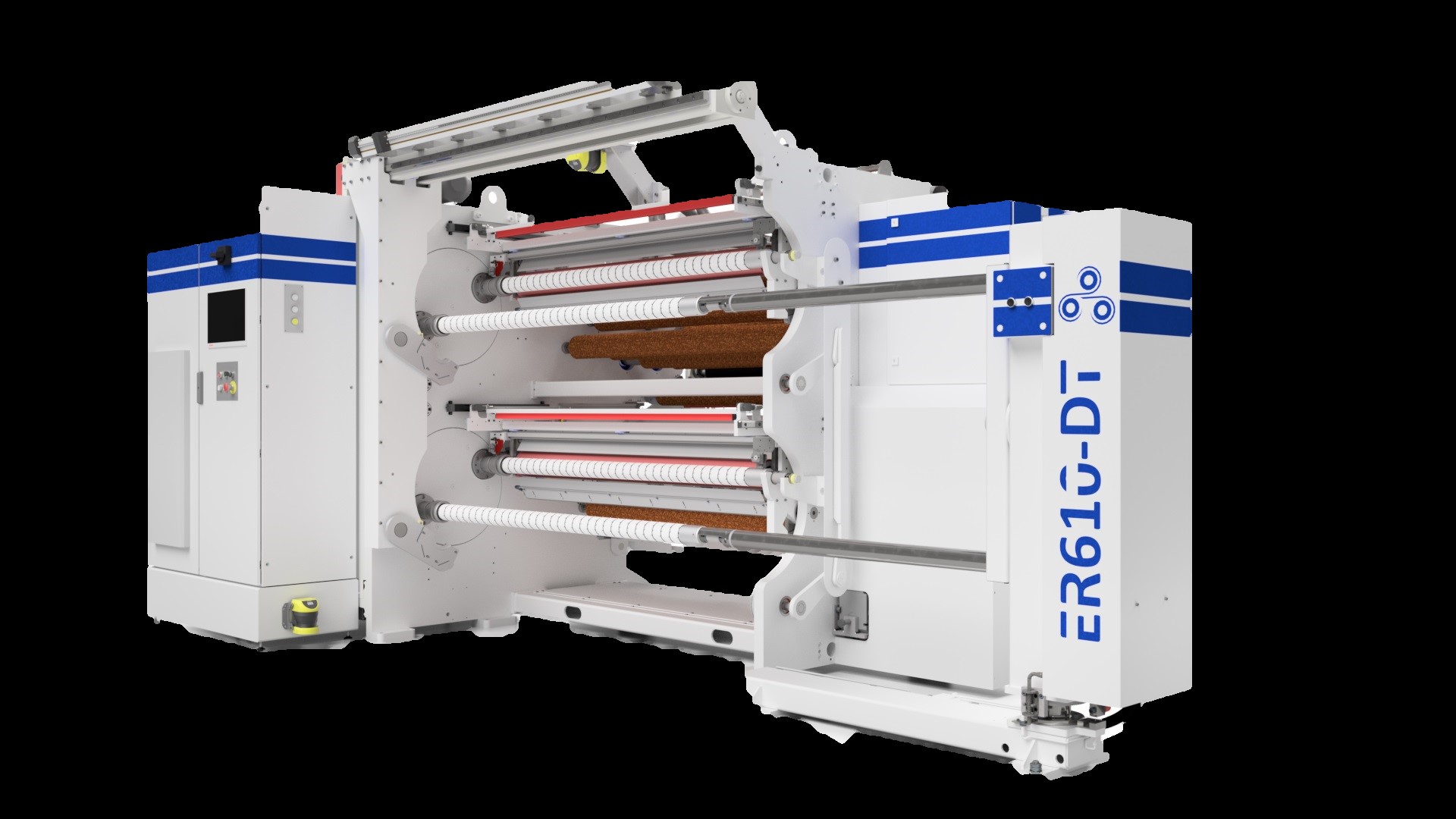

On steel, the mill may already distinguish mill edge from cut edge before anyone slits to order. Cleveland-Cliffs’ hot-rolled product sheet (opened 29 September 2026) names mill-edge coils and cut-edge coils as forms the mill supplies. Cut edges, on that language, are the edges after shearing, slitting, or trimming — not the natural mill edge that left the hot strip mill. A later slitting pass still takes trim if the ordered strips do not use the full remaining width.
Why a coil does not leave a sheet skeleton
On a sheet, parts sit in a nest. Each cut between parts consumes a strip of stock, and what remains inside and around the parts is a skeleton plus any clamp border. The count of finished pieces is a packing problem in two directions. That is the loss described in How many finished pieces one sheet can give once the kerf is counted: area that still looks like sheet, minus the slots and the leftover web that will not hold another part.
A coil or a roll fails the other way. The band is already long and already a single width. The slitter does not nibble closed profiles out of a rectangle. It divides that width into parallel strips and winds what is left at each edge as trim. If the ordered widths do not fill the parent, the leftover is a narrow ribbon, not a skeleton with part-shaped holes. At the end of the run the leftover is a length — a tail — not an offcut rectangle sitting on a nest printout.
A narrower order changes the trim even when the knives stay the same thickness. Five strips that fill a parent almost edge to edge leave little trim. The same parent, slit to one much narrower strip, leaves a wide remainder. That remainder is sellable only if another strip of a usable width still fits. A ribbon too narrow for the next order is scrap, not free stock. The knife catalog did not change. The order did.
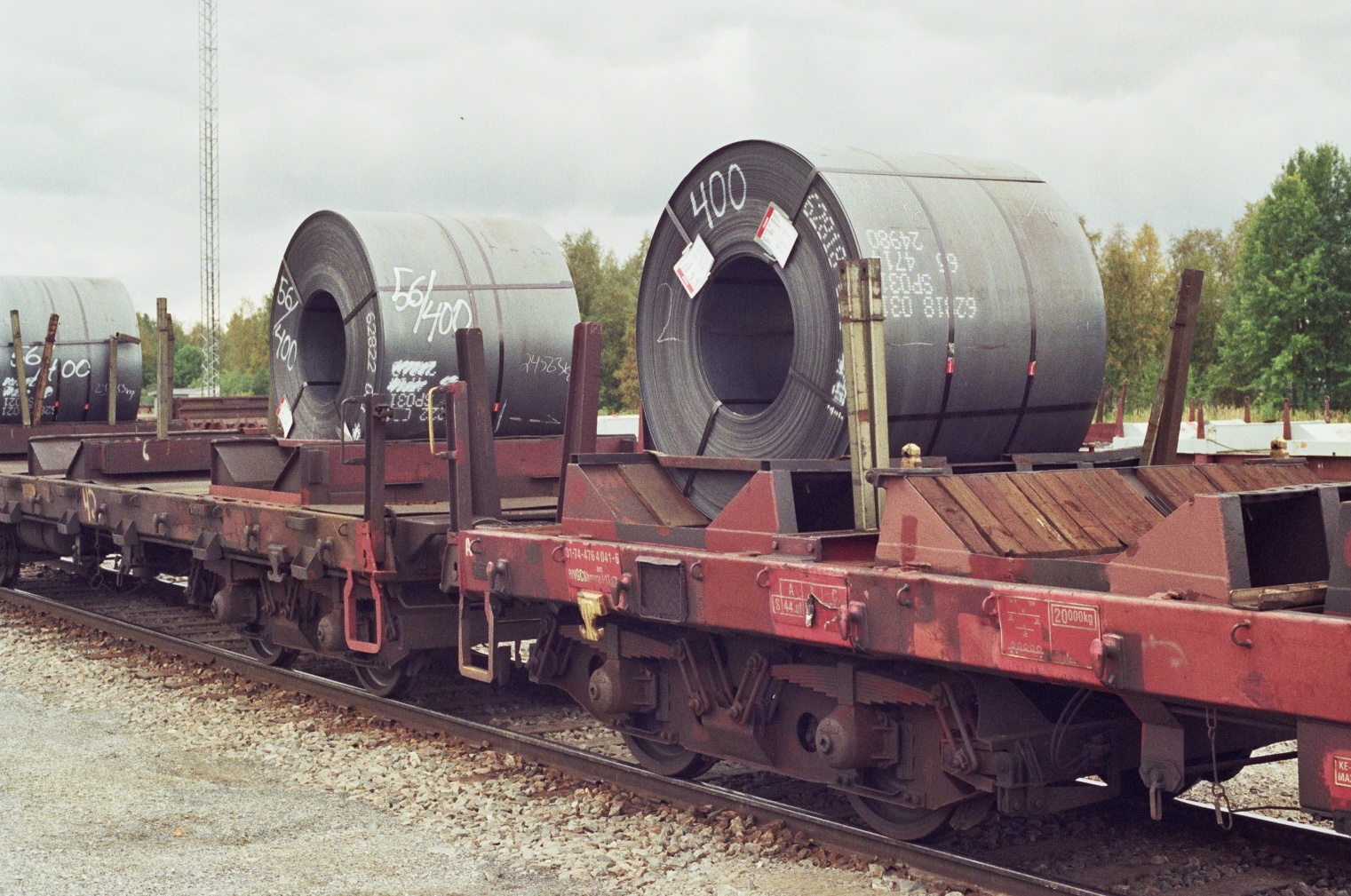

Length still matters, but not the way a bar cutoff does. A bar, a pipe, or an extrusion wastes the saw slot between pieces and the end that is too short to finish. A coil already has that length wound up. What you count at the tail is the length that will not make another full wrap of the ordered strip, plus any head or tail the mill already flagged as uncropped or damaged. Cleveland-Cliffs’ cold-rolled sheet (opened 29 September 2026) states a standard coil inner diameter of 24 in (609 mm). That core size is not leftover strip. It is the hole the coil is wound on. Do not treat core diameter as material you can slit.
What to read on the mill sheet before the slit plan
Open the mill page for the coil you are buying, not a converter’s yield claim and not a generic kerf table. The SSAB Form 200 hot-rolled page (opened 29 September 2026) states thicknesses of 1.80 mm to 15.00 mm and widths up to 1860 mm as coils, slit coils, and cut-to-length sheet. The same page lists mill-edge width as −0/+20 mm and cut-edge width as −0/+2 mm, and it says the product is available with mill or cut edge. Write those four facts next to the order: material (SSAB Form 200), thickness as ordered, process (slitting a coil, not nesting a sheet), and the mill form (coil, slit coil, or cut length).
SSAB COR-TEN A hot-rolled (opened 29 September 2026) repeats the same split: width up to 1860 mm as coil, slit coil, and cut to length, mill-edge width −0/+20 mm, cut-edge width −0/+2 mm. If the job is that grade, copy the mill-edge or cut-edge line from that page onto the slit plan. Do not copy a width from Form 200 onto COR-TEN A because the thickness ranges are not the same (Form 200 goes to 15.00 mm; COR-TEN A hot-rolled strip is listed to 12.70 mm).
Cleveland-Cliffs’ cold-rolled sheet page (opened 29 September 2026) states thicknesses from 0.015 in to 0.135 in (0.381 mm to 3.429 mm) and widths to 80 in (2032 mm), depending on dimensions and product quality. Thickness, width, and flatness tolerances are pointed to ASTM A568. Slitting is listed under outside processing, together with cut-to-length and coil coating. That means the 80 in mill-limit width is not a promise that every ordered strip will come off that coil with no trim. It is the mill’s maximum for the parent. The slit widths still have to fit inside the measured parent after the edges you actually have.
On the knife side, open the maker’s current listing for the knives on the arbor, not a photo of a slitter. The DIENES dished-knife page already cited lists thickness as 0.6 mm to 4 mm. The DIENES flat-top knife page (opened 29 September 2026) lists thickness as 1.2 mm to 5 mm and outer diameters from 90 mm to 220 mm, and it names high-performance winders in the paper industry as a use. Record the knife as a consumable. After a knife change, the old trim plan is still a width plan, but the edge the next process sees is no longer the edge you qualified on the previous knives.
If any of material, thickness, process, or machine (or mill form) is missing, leave a published “kerf” or “trim width” blank. A millimetre copied from another coil is not a measurement of this parent.
The choice before the slit plan or the quote
The decision this topic turns on is which widths you will actually wind from this parent, and whether the leftover width and the leftover length are still material or already scrap.
If the measured parent, after mill-edge or cut-edge condition is applied, will not hold the ordered strips plus the trim the slitter must take at each edge, you do not have a nest problem. You have the wrong parent or the wrong strip mix. Options that stay on this topic: order a parent closer to the strip set, combine strip widths so the remainder is a usable daughter rather than a ribbon, or buy already-slit coil at the width the mill lists as slit coil. SSAB Form 200 and SSAB COR-TEN A both list slit coil as a delivery form. That is a purchase choice, not a yield percentage.
If the four facts are not all on the record — grade, thickness, mill-edge or cut-edge, and measured width — do not fill the trim line with a catalog knife thickness. Leave the trim width blank on the quote and measure the parent before the arbor is dressed.
At the tail, count the length that will not finish another ordered piece. If that remainder is long enough for a shorter make, it is still an offcut only when that make is real. If it is too short, it is scrap. Do not carry it as free stock into the next coil’s math.
Why mill-edge width is not the width you can sell
SSAB Form 200’s mill-edge tolerance is twenty millimetres over and none under. Its cut-edge tolerance is two millimetres over and none under. Those two numbers, from the same mill page opened on 29 September 2026, are the specific fact this stock form carries. A mill-edge parent can be substantially wider than the ordered width and still be in tolerance. A cut-edge or slit-edge parent is held much tighter. Sellable strip width is the width after the edges the customer will use, not the mill-edge number on the tag.
Cleveland-Cliffs’ cold-rolled mill limit of 80 in (2032 mm) is a cap on what that mill will roll, not a statement that 80 in of slit strip will ship. The same page’s 24 in (609 mm) inner diameter tells you the core, not the band. SSAB’s 1860 mm maximum for Form 200 as coil and as slit coil tells you the parent can be that wide; it does not tell you how the 1860 mm will be divided. A narrower order still changes the trim.
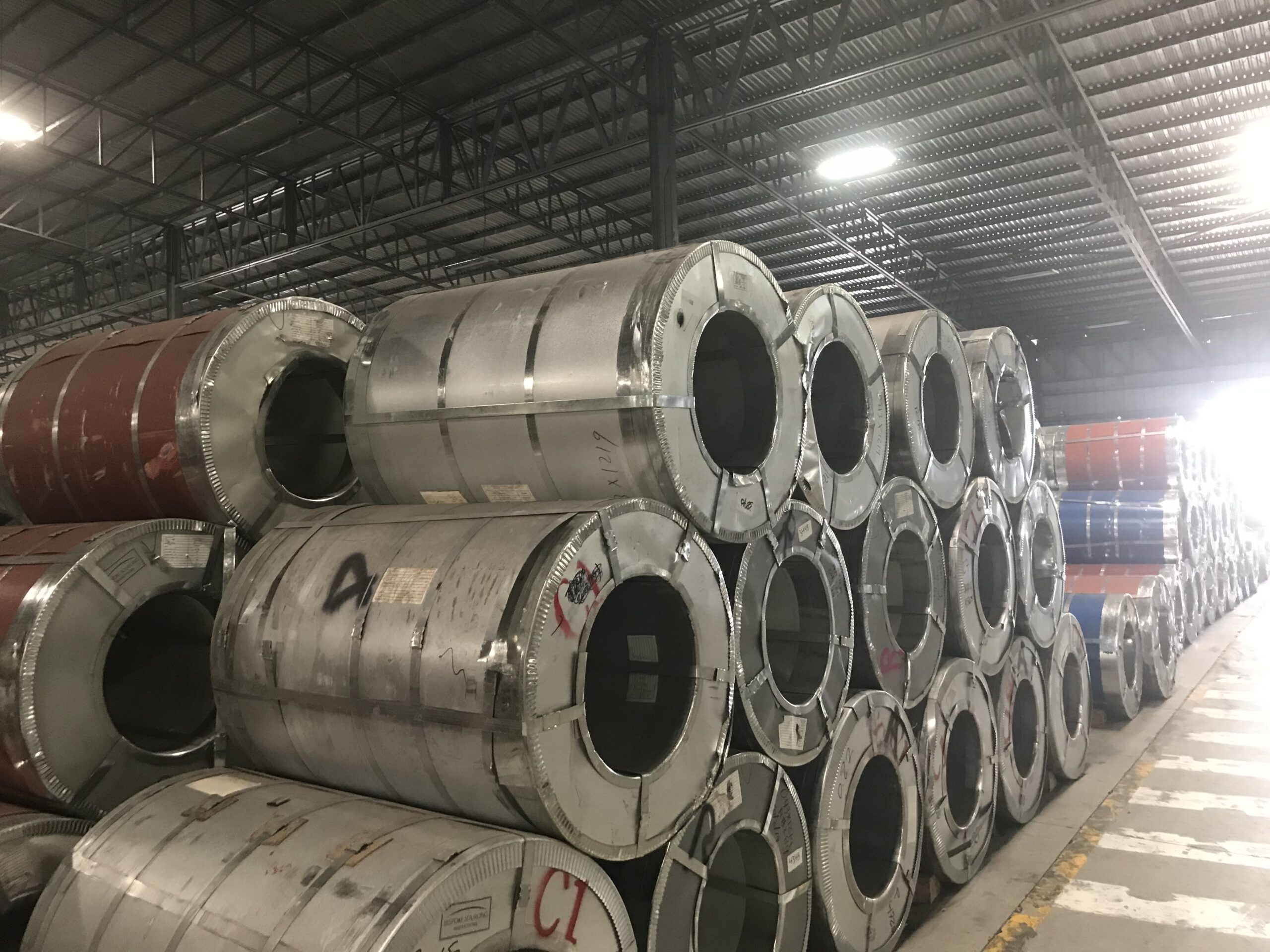

Paper and film follow the same shape of loss even when the mill sheet uses different words. A jumbo or parent reel is slit into narrower reels. The leftover is edge trim and a tail, not a sheet skeleton. The DIENES flat-top listing names paper-industry winders as a place those knives run. Use that as a process fact: the web is slit along its length. Do not invent a deckle, a trim millimetre, or a converter’s yield for a paper mill you did not open.
The count that makes the coil quote wrong
The harmful mistake is to price the job from parent width as if that width were the strip that ships, or to copy a sheet-nest waste onto a coil. The customer pays for the coil or the roll that had to be bought, including the trim at each edge and the tail that will not finish. A quote built only on finished strip area understates the stock. Machine time on the slitter is a separate line. A catalog knife thickness is not a substitute for the measured parent, the mill-edge or cut-edge line, and the leftover length at the end of the roll.
Read next: How many finished pieces one sheet can give once the kerf is counted · What a slit roll keeps, and what the trim throws away